
March 29, 2026
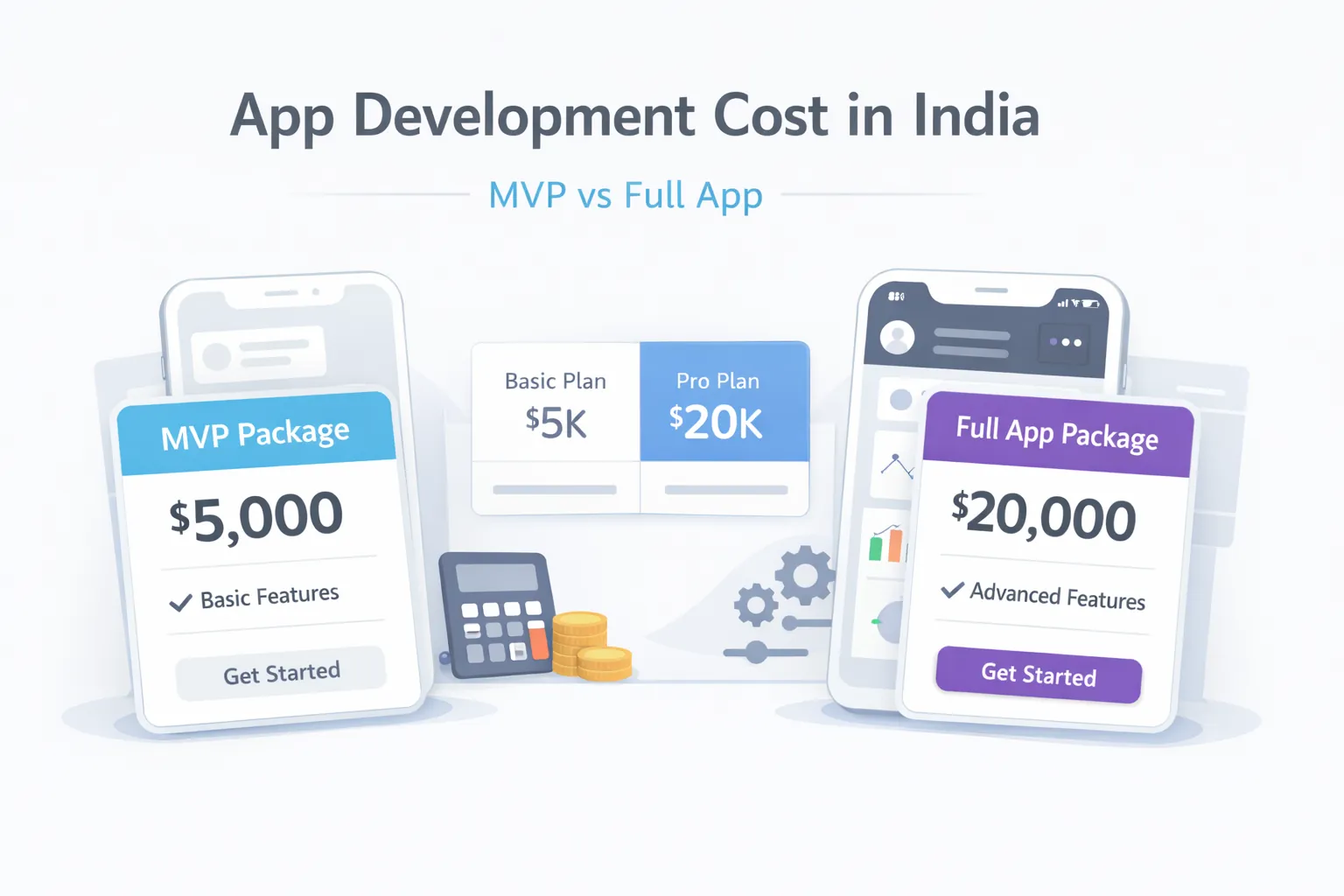
App Development Cost in India: MVP vs Full App
Estimate app development cost in India by comparing prototype, focused MVP, and full product scope across platforms, backend, integrations, QA, and support.
Read articlePublished Updated
Mobile app development company in Noida: pricing, timeline, app types, process, and delivery expectations for businesses in 2026.
Service-area note: VASUYASHII is based in Delhi NCR and supports businesses remotely across India. A city-focused guide describes service and planning context; it does not claim a physical office in every location mentioned.
Explore the parent topic: Mobile App Development Services →Businesses in Noida often reach mobile app development from one of three directions. Either they want a customer-facing app, they want to digitize an internal workflow for staff, or they already have a website or software system and now need mobile access.
The problem is that app quotes vary wildly. One vendor says an app can be built in ₹60,000. Another says ₹6 lakh. One says 15 days. Another says 4 months. That makes it hard for business owners to judge what is realistic and what is just sales talk.
This guide explains what a mobile app development company in Noida should actually deliver, what app projects usually cost in 2026, what changes the timeline, and how to choose the right build scope.
For most Noida businesses, the right first app is a focused MVP, not a giant platform. A practical app project usually starts with a limited use case, a clean admin backend, and only the core user flows needed for launch.
Typical pricing ranges:
₹1.5 lakh to ₹3.5 lakh₹3.5 lakh to ₹7 lakh₹7 lakh to ₹20 lakh+Most realistic business app timelines are between 5 and 14 weeks depending on complexity.
Many companies say they want an app when what they really need is a faster website or a better web application. An app makes sense when mobile behavior is central to the workflow.
That is why a good Noida app company will often suggest starting with an MVP or even a web-first product if that reduces risk.
The app market in Noida is broad, but most serious business projects fall into a few common categories.
Used for attendance, sales visits, task reporting, approvals, service logs, order capture, and field operations.
Used for bookings, memberships, order tracking, loyalty, subscriptions, or service requests.
These are validation-first products where speed to market matters. The smart approach here is to build only the key journey and analytics layer first.
Some companies already have admin software and now want mobile access for customers or staff. In these projects, backend integration quality matters more than surface design alone.
Relevant reads:
These are the features that usually matter most in a business app project.
Loyalty systems, wallet logic, advanced notifications, referrals, chat, AI assistance, and offline sync can be added later after the main flow proves useful.
App pricing should be judged by scope, not by the word "app." A basic app with no serious backend is very different from an app that connects user roles, reports, payments, and operations.
₹1.5 lakh to ₹3.5 lakhBest for simple login, form flows, and limited backend interaction.
₹3.5 lakh to ₹7 lakhBest for customer or field apps with backend, notifications, and admin support.
₹7 lakh to ₹20 lakh+Used for multi-role apps, deep integrations, large datasets, or product-style builds.
If you are building for the first time, budget for the app plus the backend together. A polished mobile UI is useless if the backend is weak.
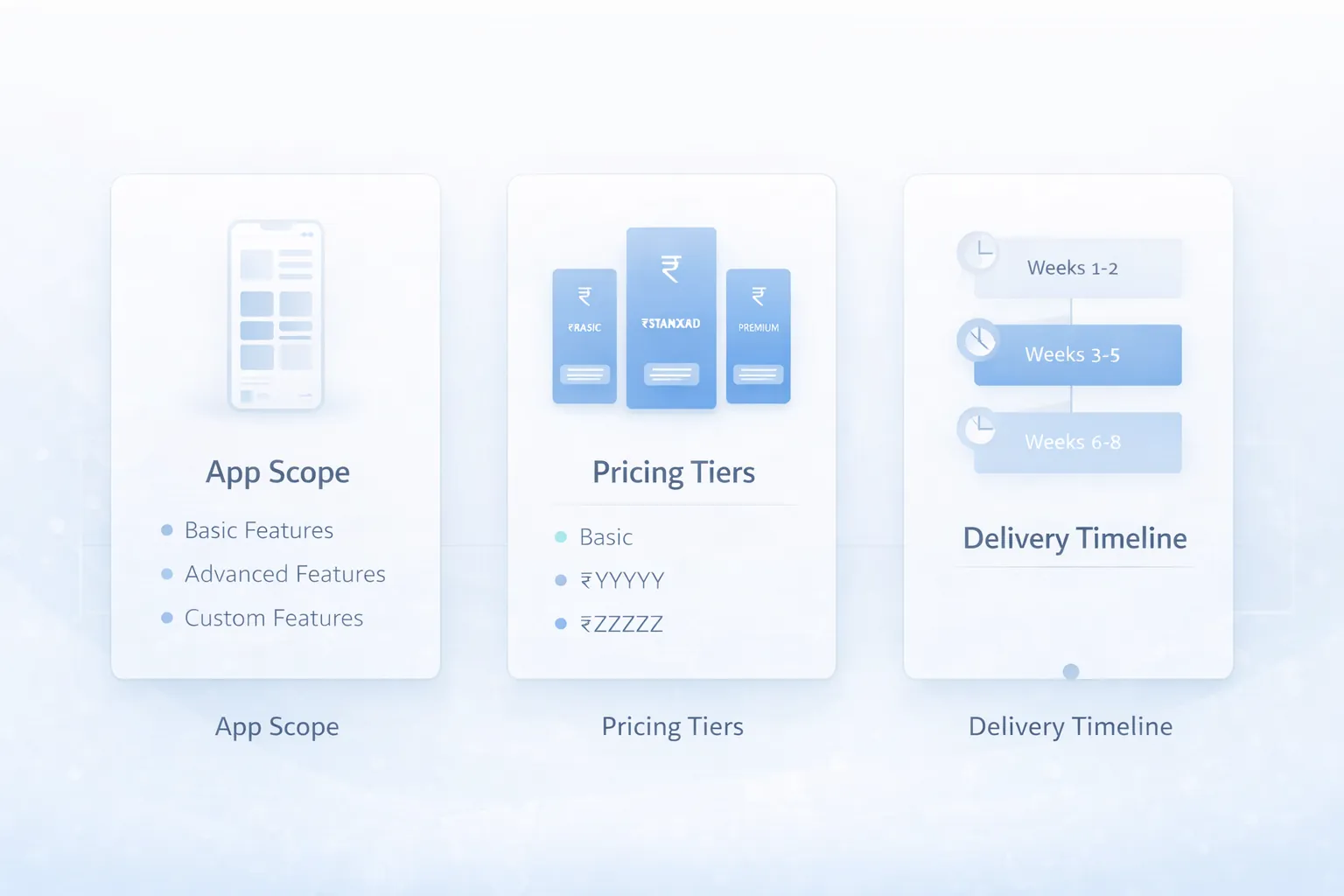
Noida businesses often ask for "fast delivery," but timeline depends on decision speed and feature clarity as much as development effort.
If approvals are quick and scope is clean, launch speed improves significantly.
A smart app company defines the one or two user journeys that justify the app. That focus keeps cost and timeline under control.
Almost every serious app needs user data, status updates, admin control, and reporting. Backend planning should happen early, not after the UI is done.
App screens should be optimized for thumb behavior, clarity, and repeat use. Good business app UX is more about speed and fewer mistakes than flashy visuals.
The best process includes demos and milestone reviews. This lets the client correct direction without waiting for the whole build to finish.
For staff apps or service apps, a pilot group often reveals the real missing pieces faster than theory does.
If your use case is clear but you are unsure whether to build a full app or start with a smaller MVP, that discussion should happen before design starts, not after.
Most business apps today are built faster and more efficiently with a shared cross-platform stack plus a strong backend.
Flutter or React Native depending on product needs and team preferenceNode.js for APIs, auth, workflows, and integrationsPostgreSQL for structured app and reporting dataNext.js or a similar web stack for role-based managementThese are the biggest drivers of mobile app pricing:
Many businesses underestimate how much backend and QA affect total project cost. The app is only the visible layer.
A good-looking UI is easy to sell. A stable backend and reliable release process are harder and more valuable.
Some vendors build the app but leave store publishing, screenshots, privacy text, or update cycles vague. Ask clearly.
It is better to launch one clear workflow that people use than a bloated app people uninstall.
Most practical business apps start around ₹1.5 lakh and often land between ₹3.5 lakh and ₹7 lakh for a solid MVP.
Simple MVPs may take 5 to 8 weeks. More complex apps with backend and integrations can take 10 to 14 weeks or more.
That depends on your audience, but many business apps now launch with a cross-platform stack to cover both efficiently.
In most business app projects, yes. Without admin control, the app becomes difficult to manage and support.
Yes, and in many cases that is the better first step. A good vendor should help you decide honestly.
Changing scope repeatedly after development has started without resetting priorities and deadlines.
Yes. Even a simple MVP should track installs, signups, and key actions so you know what users actually do.
Usually a role-based operations app tied to a clear admin dashboard and reporting layer.
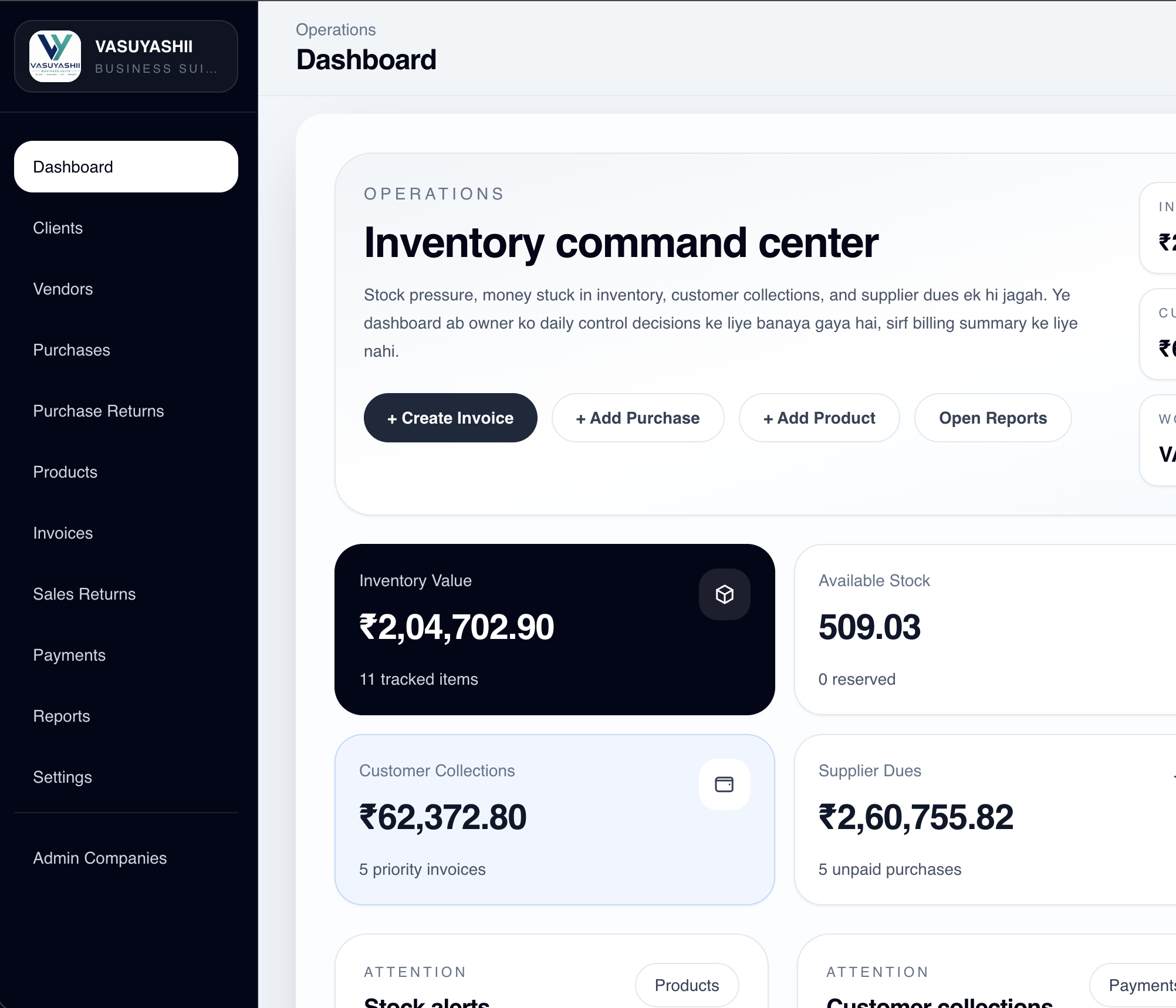
A mobile app quotation is incomplete when it shows only phone screens. VASUYASHII's current Business Suite dashboard is first-party evidence of the owner-side layer behind a business app: users, products, invoices, payments and reports require one governed backend before mobile actions can be trusted.
| Release checkpoint | Test | Evidence before approval |
|---|---|---|
| identity | login, logout, expired token and role restriction | test accounts for each role |
| network | slow, offline and duplicate-submit behaviour | recorded retry outcomes |
| device | small/large screens, permissions and background state | supported-device matrix |
| backend | validation, audit trail and error response | API acceptance results |
| store | metadata, privacy details and review access | owner-controlled store account |
Decision example: an internal sales app used by 15 staff can often launch Android-first or as a responsive web app if camera, offline and push requirements are modest. A public consumer app with subscriptions, iOS distribution and account deletion needs store-policy work in the first estimate.
Limitations: current VASUYASHII mobile and desktop directions are under development; this article does not claim a published Noida client app. Store review time, third-party SDK changes, map/SMS/payment fees and hardware testing are outside a fixed development timeline unless named.
Use Google's Android architecture guidance for state and responsibility boundaries. Apple's App Review Guidelines require working backend access, complete metadata and appropriate review credentials; approval is never guaranteed by the developer.
If you want a mobile app that is usable, measurable, and operationally solid, the project should start with scope clarity, backend planning, and a phase-wise rollout.
Related Articles
March 29, 2026
Estimate app development cost in India by comparing prototype, focused MVP, and full product scope across platforms, backend, integrations, QA, and support.
Read article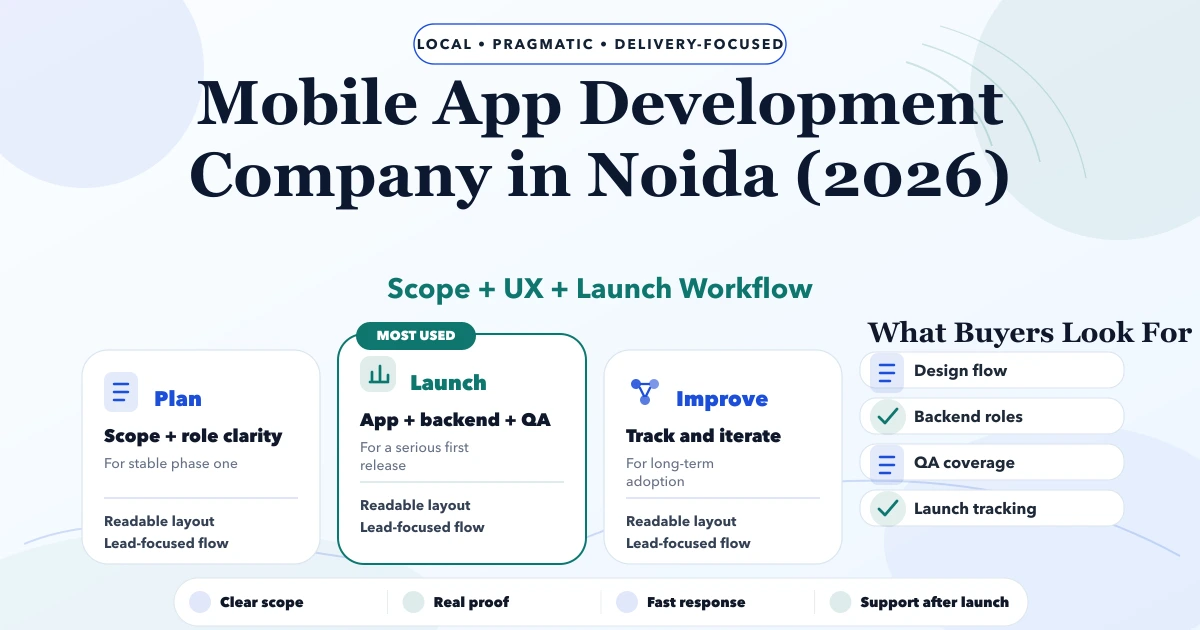
May 3, 2026
Plan a Noida field-operations mobile app with offline data capture, task assignment, photo evidence, syncing, permissions, rollout, and support.
Read article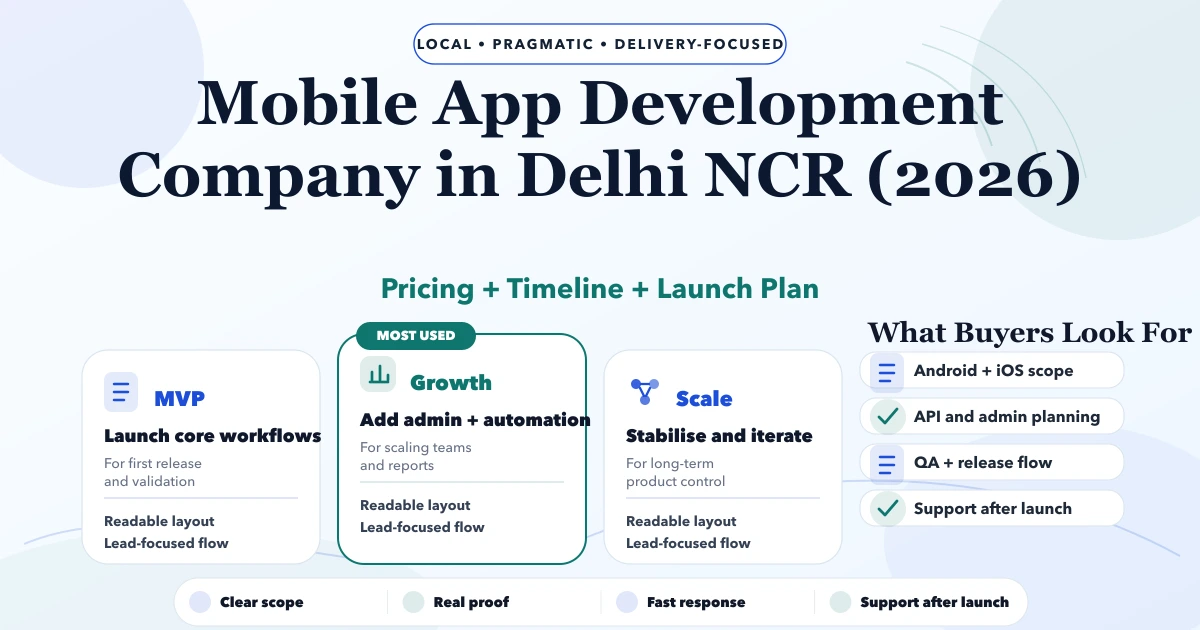
May 3, 2026
Plan a Delhi NCR customer self-service app with account data, requests, documents, notifications, permissions, backend ownership, security, and rollout.
Read article
April 5, 2026
Plan a Panipat textile catalogue with fabric specifications, colours, MOQ, sample and swatch requests, wholesale enquiries, lead times, and data ownership.
Read article