
May 7, 2026
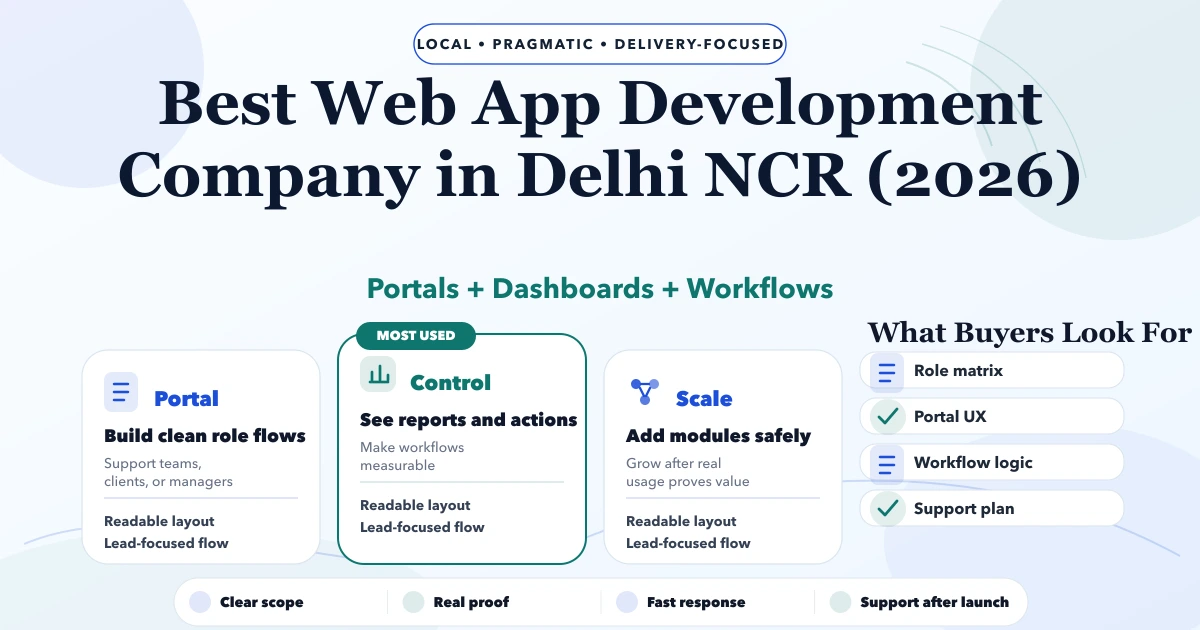
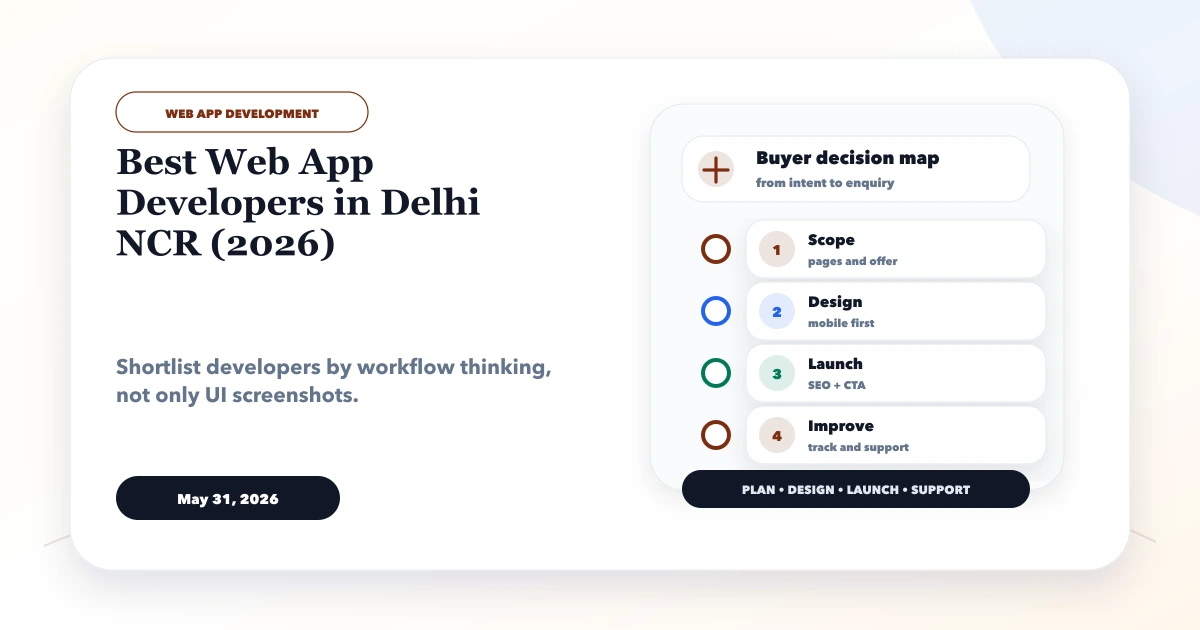
Best Web App Development Company in Delhi NCR (2026)
Best Web App Development Company in Delhi NCR (2026) guide with pricing, process, timeline, deliverables, proof links, and practical planning for businesses.
Read articlePublished Updated
Compare Delhi NCR web app developers using discovery, architecture, security, ownership, delivery evidence, support and a weighted vendor scorecard.
Service-area note: VASUYASHII is based in Delhi NCR and supports businesses remotely across India. A city-focused guide describes service and planning context; it does not claim a physical office in every location mentioned.
Explore the parent topic: Web App Development Hub →“Best” is not a verifiable vendor category without a defined project and evidence. The right web app developer for a focused dashboard may be wrong for a multi-tenant SaaS product, a payment workflow or a migration-heavy business system.
This guide provides a due-diligence process for Delhi NCR buyers. It covers requirement readiness, technical questions, proof review, ownership, estimates, delivery controls and a weighted scorecard. It does not rank providers or claim that locality alone proves capability.
Shortlist a provider only after confirming:
Compare responses against the same brief. Different briefs create misleading price and capability comparisons.
Provide:
Use the web app cost guide to turn these inputs into comparable cost units.
Strong discovery questions reveal risk:
A provider who immediately promises a fixed completion date without examining these questions may be estimating a generic template rather than the actual project.
Ask for evidence by relevance.
| Evidence | What it can demonstrate | What it cannot prove alone |
|---|---|---|
| Live public product | current interaction and visual quality | private admin, security or client result |
| Labelled demo | design and workflow thinking | paid customer deployment |
| Case study | process and documented outcome | capability outside its scope |
| Code walkthrough | implementation quality | production operations over time |
| Architecture sample | technical reasoning | final project estimate |
| Reference call | working relationship | security or code quality |
Do not accept screenshots without context as proof of ownership. Do not treat fictional demos as client work.
When a provider offers a reference, ask permission to discuss the relevant project rather than requesting confidential details. Useful questions include:
A positive reference confirms a working relationship, not universal technical competence. Match the reference to your project type, verify evidence separately and record any limitations in the scorecard.
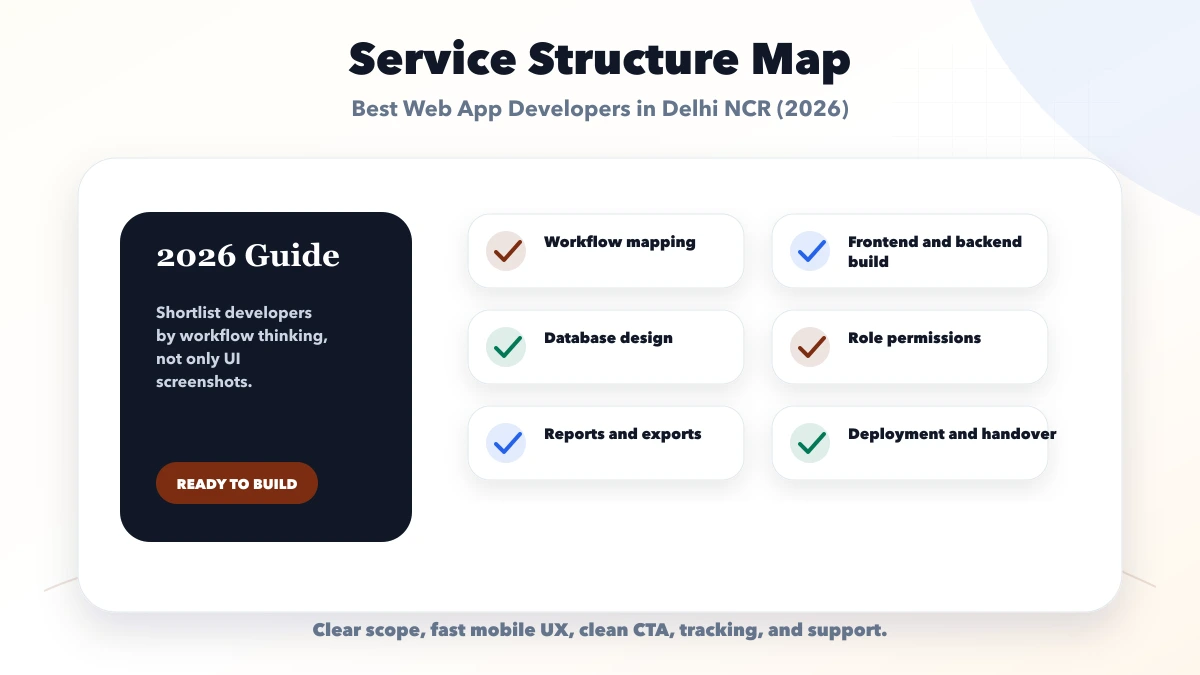
The provider should explain choices in plain language.
How will the interface handle responsive tables, forms, loading, errors, accessibility and slower devices?
Where are business rules enforced? How are transactions, retries and validation handled?
What are the main records and relationships? How are backups and migrations tested?
How are sessions or tokens handled? How does the backend enforce role and company boundaries?
Which system owns each record? How do webhooks, rate limits, failures and reconciliation work?
What environments, logs, monitoring, alerts and recovery procedures exist?
The goal is not to force one technology. It is to determine whether choices match the project.
Security should appear in the estimate and acceptance plan, not only in a sales presentation.
Works when requirements and acceptance are stable. It still needs change control for new information.
Works when discovery and priorities will evolve. It needs transparent backlog, burn reporting and product ownership.
Locks a small phase, learns from it and estimates the next. This often balances budget control and uncertainty.
Useful for continuous product work when the buyer can provide priorities, decisions and ongoing budget.
Ask which model fits the uncertainty and why.
| Criterion | Suggested weight | Evidence to request |
|---|---|---|
| Workflow understanding | 20% | written scope and edge cases |
| Relevant delivery evidence | 15% | inspectable product, demo or case study |
| Architecture and security | 20% | technical proposal and walkthrough |
| Estimate clarity | 15% | assumptions, exclusions and milestones |
| Ownership and handover | 10% | contract and access plan |
| Communication | 10% | meeting notes, response and escalation |
| Support and operations | 10% | SLA, monitoring and recovery plan |
Adjust weights to the project. For payment, healthcare or sensitive business data, increase security and operational weight.
Score only evidence received. Do not award points for claims such as “top company” or “100% secure.”
The existing planning bands for this content cluster were:
| Scope | Early planning band | Typical delivery window |
|---|---|---|
| Developer-led MVP | Rs. 1.8 lakh to Rs. 5 lakh | 4 to 10 weeks |
| Business web app | Rs. 5 lakh to Rs. 12 lakh | 2 to 4 months |
| Advanced platform | Rs. 12 lakh to Rs. 35 lakh+ | 4 to 9 months |
These are not fixed VASUYASHII prices or verified Delhi NCR averages.
Normalise quotes for:
The lowest total may exclude work the other provider included.
Write:
Use customer-controlled accounts where practical. Avoid arrangements where production access depends permanently on one individual.
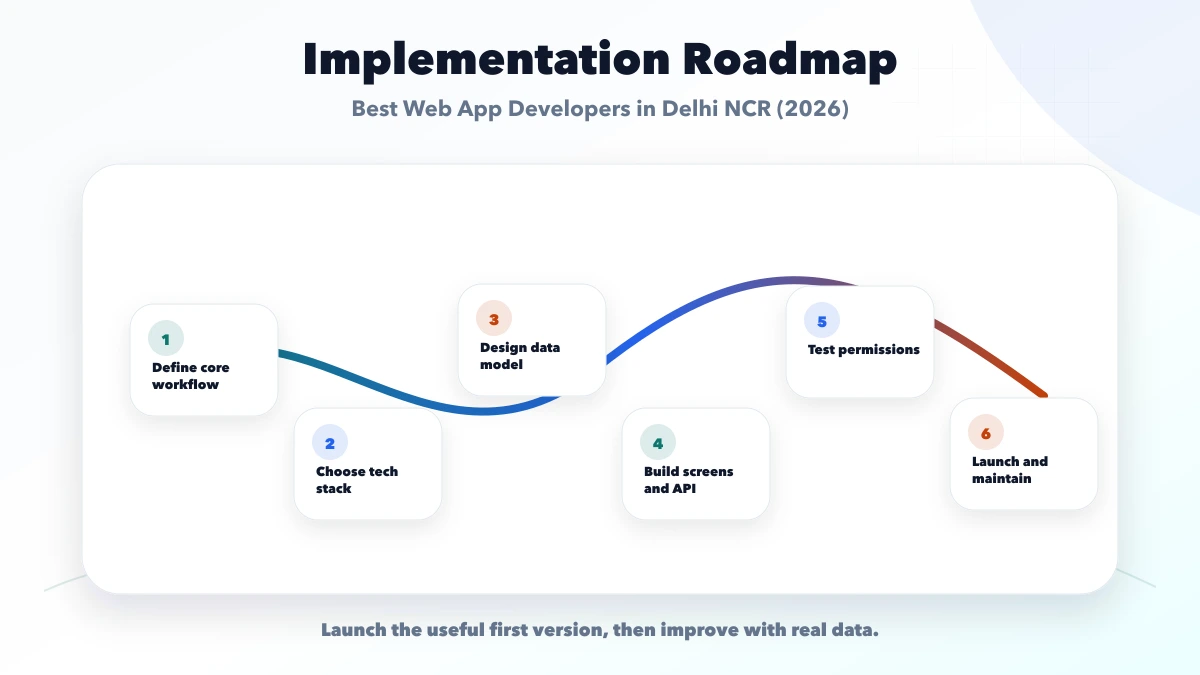
Brief, NDA where appropriate, evidence review and risk questions.
Workflow, records, roles, architecture, roadmap and estimate.
One complete outcome with production-quality foundations.
Representative users and safe records test normal and exception cases.
Written evidence closes milestone requirements.
Migration, accounts, monitoring, recovery, documentation and support.
Current VASUYASHII public evidence includes:
The demos are design demonstrations, not customer outcomes. The Business Suite is product evidence for current billing, inventory and business-management workflows, but it does not prove every project type discussed here.
VASUYASHII does not use this page to claim an independent “best developer” award, a guaranteed project outcome, a local office in every city or unnamed client results.
Compare web application services, custom software scope, automation services and Business Suite.
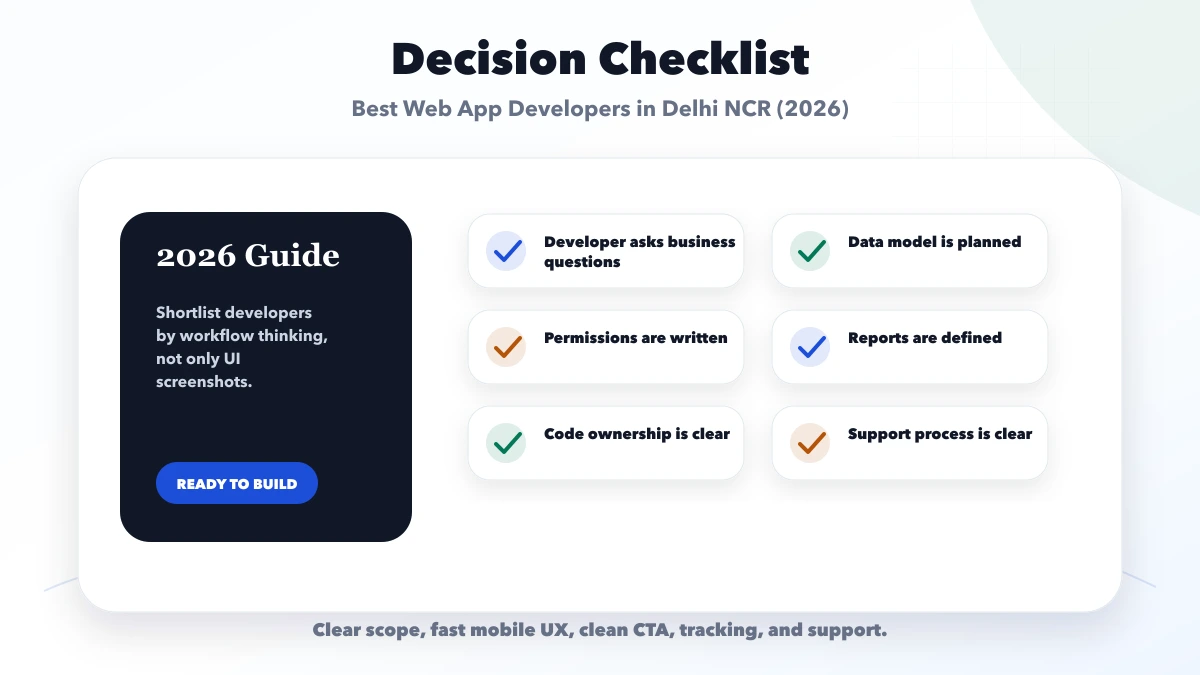
Three to five qualified providers are usually enough for a structured comparison. Too many weak responses create noise.
Ask for relevant evidence and a clear discovery proposal. Unpaid custom work can reward presentation effort rather than delivery quality.
Not always. On-site workshops may help some projects, but engineering process, evidence, ownership and support matter more than a location keyword.
Define outcomes and constraints first. Ask the provider to justify a maintainable stack based on team capability, hosting, integrations and long-term ownership.
Open live links, inspect public credits where appropriate, ask what the team delivered and request a walkthrough or reference with permission.
Use a written milestone tied to discovery or an accepted deliverable. Avoid paying against vague promises or transferring full control before terms are clear.
Prepare one comparable brief and scorecard. Shortlist providers only after relevant evidence and ownership terms are clear. For a scoped discussion, contact VASUYASHII.
Related Articles
May 7, 2026
Best Web App Development Company in Delhi NCR (2026) guide with pricing, process, timeline, deliverables, proof links, and practical planning for businesses.
Read article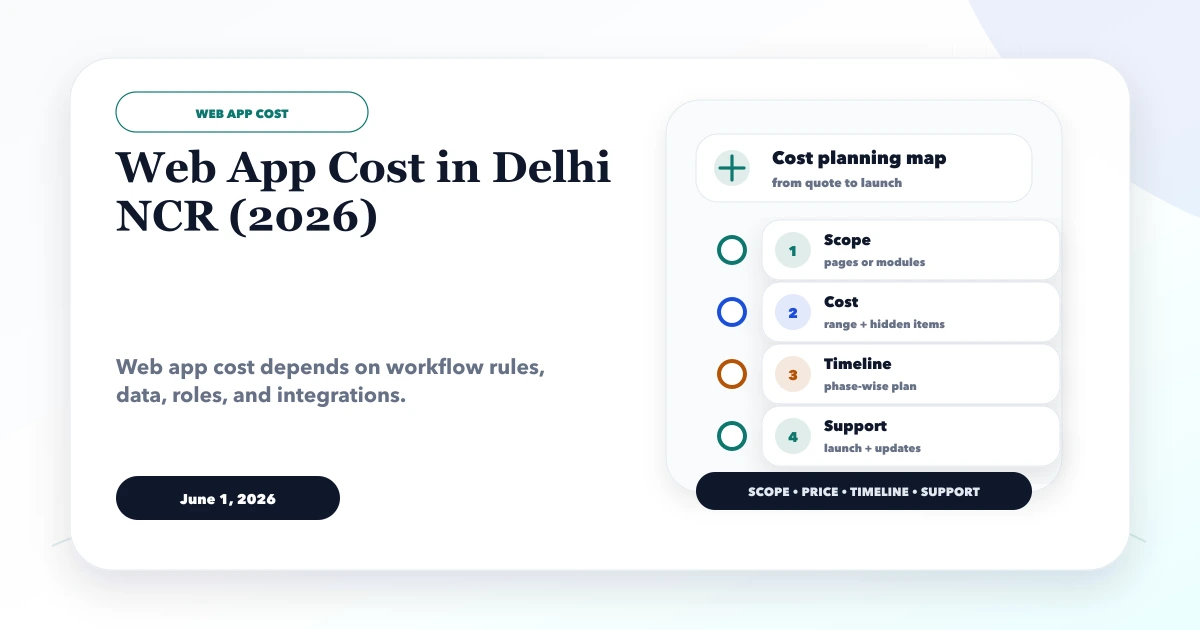
June 1, 2026
Estimate a Delhi NCR web app by workflows, roles, screens, integrations, data and acceptance—not page count—with practical planning bands.
Read article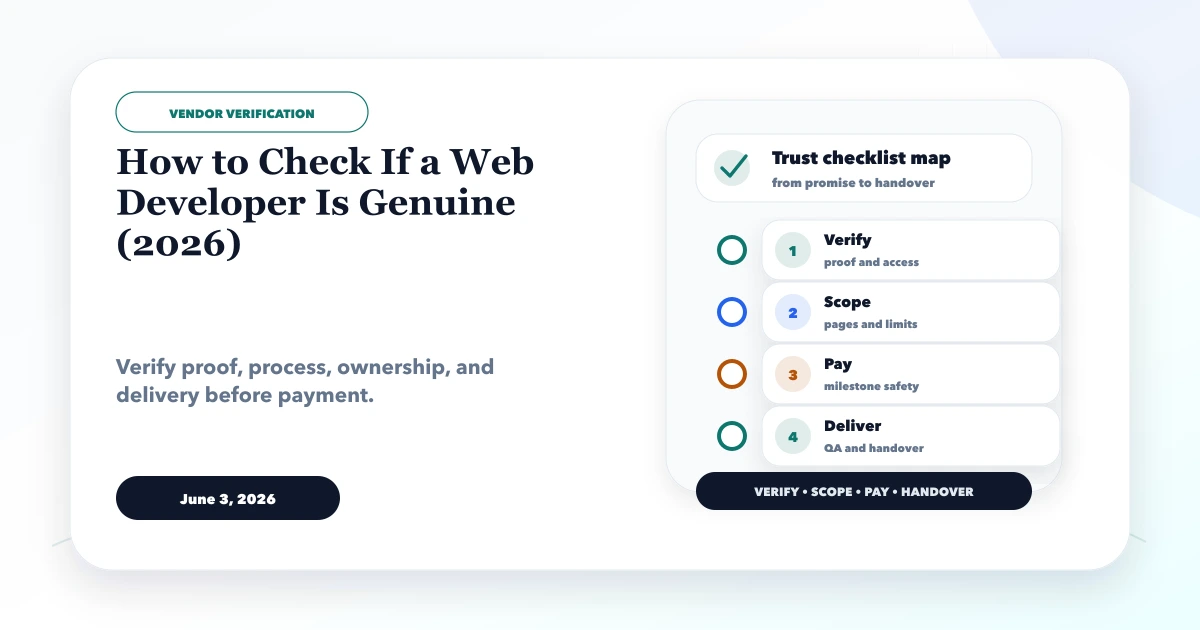
June 3, 2026
How to check if a web developer is genuine in 2026 with portfolio checks, references, scope, payment safety, and red flags.
Read article
May 9, 2026
web developer near me Delhi NCR: pricing, checklist, FAQs, trust signals, and practical SEO steps for Indian SMB owners.
Read article