
March 22, 2026
Website Development Company in Hapur (2026)
Plan a Hapur service website for inspections, repair bookings, maintenance enquiries, service areas, WhatsApp updates, and measurable lead routing.
Read articlePublished Updated
Plan a Hapur supplier website with product categories, trade enquiries, dispatch coverage, quotation inputs, verified documents, tracking, and ownership.

Service-area note: VASUYASHII is based in Delhi NCR and supports businesses remotely across India. A city-focused guide describes service and planning context; it does not claim a physical office in every location mentioned.
Explore the parent topic: Website Development Delhi NCR Hub →A supplier comparing a website development company in Hapur may need to answer two buyer questions before receiving a useful enquiry: is the required product or service available, and can it be supplied to the required destination and timeline?
This guide is for traders, agricultural and industrial suppliers, building-material businesses, wholesalers, packaging firms, and service providers with dispatch or coverage decisions. It focuses on product categories, trade qualification, logistics context, documents, and quotation routing. It does not claim a VASUYASHII Hapur office, customer, sales result, or ranking.
Written by Tushar C. (Founder, VASUYASHII) using the current VASUYASHII website and workflow planning process. The business must approve product, stock, tax, transport, certification, and coverage claims.
A supplier website should make these decisions easy:
Do not display real-time stock, freight, price, or delivery promises unless the underlying operation can maintain them.
| Buyer | Typical need | Website route |
|---|---|---|
| Retail/business customer | Small quantity or local supply | Product and contact |
| Dealer | Range, territory, trade process | Dealer enquiry |
| Contractor | Specification, quantity, site | RFQ |
| Institutional buyer | Documents, tax, formal quote | Procurement enquiry |
| Existing customer | Dispatch or service update | Support route |
| Supplier/vendor | Purchase relationship | Vendor route |
Separate these routes so sales does not manually classify every message.
Choose categories by buyer use:
Avoid a flat gallery. Each category should explain common options, selection factors, availability method, and quotation inputs.
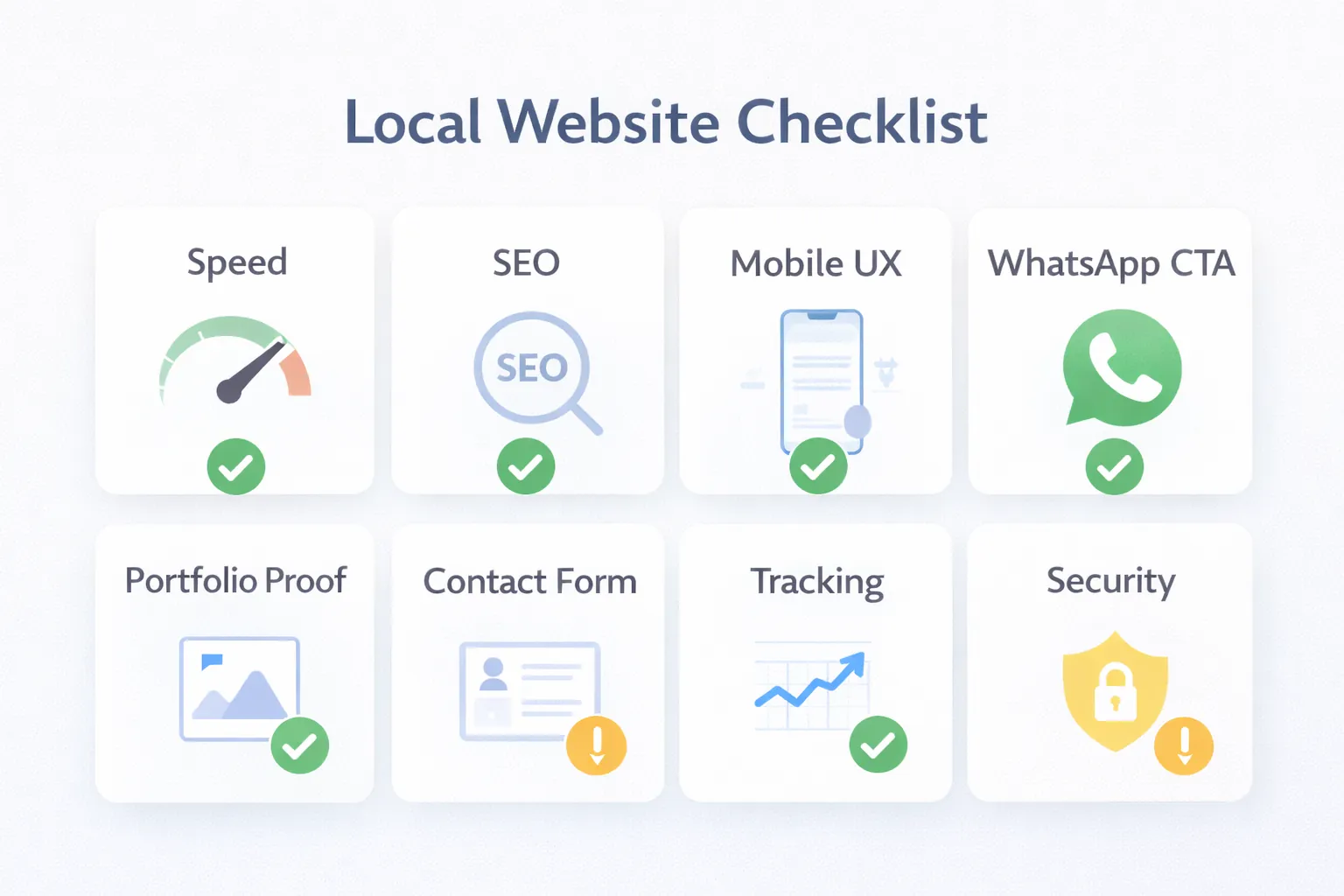
Include:
Do not copy manufacturer descriptions without checking rights, accuracy, and uniqueness.
Explain the real model:
Avoid publishing a universal delivery time. Product, quantity, destination, transport availability, and payment status can change it.
A trade quotation may require:
Detailed procurement documents should move to a verified later channel. Do not collect identity or financial records in a basic public form.
Use a safe prefilled message:
Please quote product HP-210, quantity 40 units, delivery area [area].
Do not embed private pricing, customer data, authentication tokens, or internal notes. Track the product and action safely, not the phone number or message text.
Datasheets, certificates, test reports, tax documents, catalogues, and policies need version ownership.
| Document | Public or controlled | Review owner |
|---|---|---|
| Product datasheet | Public when approved | Product team |
| Catalogue | Public when current | Sales/marketing |
| Certificate | Based on distribution rights | Compliance owner |
| Formal company documents | Usually controlled | Authorized management |
| Quote | Buyer-specific | Sales |
| Dispatch document | Transaction-specific | Operations |
Do not publish sensitive business documents merely to appear trustworthy.
The public catalogue can request availability. A stock system manages:
If standard billing and stock controls are needed, review the VASUYASHII Business Suite. For custom workflows, use software development.
Record:
Inside the sales system, classify relevance, quotation, follow-up, and outcome. Do not send names, phone numbers, email, GSTIN, destination, or free-text requirement to analytics.
Select representative categories and record quotation inputs, stock wording, documents, and delivery rules.
Map homepage, categories, product templates, RFQ, dealer, support, about, and contact.
Complete one difficult product category and one dispatch enquiry before importing all data.
Implement responsive catalogue, search, forms, validation, metadata, analytics, and ownership.
Submit realistic non-sensitive enquiries and verify routing context.
Assign product, document, coverage, price policy, and form reviews.
VASUYASHII offers website development, web applications, and integrations. We separate the public product experience from private inventory, quotation, billing, and dispatch systems.
The website cannot guarantee enquiries or sales. Use contact to share the real catalogue and dispatch workflow.
Show them when accurate and maintainable. Otherwise explain the quotation method and required inputs.
Yes when product, quantity, destination, vehicle, and provider rules are reliable. Otherwise request destination and quote manually.
Only when inventory data is accurate and integrated. Use “confirm availability” when the process is manual.
Only through a reviewed upload process with validation, storage, access, retention, and security controls.
No. Dealer approval, territory, account pricing, orders, documents, and support may require a controlled portal or CRM workflow.
No. Useful content and genuine operations support relevance, while competition, authority, technical quality, and external signals also matter.
A useful enquiry route should help the buyer and sales team establish feasibility without presenting an unverified delivery promise. Start with the product category, quantity and unit, delivery location, required date, and buyer type. Then route the request according to what the business can genuinely evaluate.
For example:
The website should not calculate freight, delivery dates, or availability unless the underlying data and rules are reliable. A structured RFQ with accountable follow-up is safer than an automated promise based on stale inputs.
Review a small operational checklist every month:
Use the findings to improve category structure and qualification, not to publish unsupported claims. If buyers repeatedly ask for live inventory, account pricing, or order status, evaluate a controlled portal through web application development instead of forcing those functions into public pages.
Before publishing, ask the product owner, dispatch owner, and enquiry owner to review the website separately. The product owner verifies names, units, specifications, images, and documents. The dispatch owner checks coverage language, lead times, freight boundaries, and claims that depend on transport availability. The enquiry owner confirms routing, response expectations, qualification fields, and follow-up status.
Record unresolved items instead of hiding them in informal messages. A product awaiting confirmation can remain unpublished; an uncertain delivery area can be described as subject to review. Confirm that domain, hosting, analytics, form, WhatsApp, and content accounts are controlled by the business. Finally, submit harmless test enquiries for an available product, unavailable category, incomplete specification, and distant destination. Each should reach the correct person with enough context to act.
Keep the dated test record with the launch checklist.
Build the Hapur supplier website around product discovery and dispatch-ready quotation inputs. Keep stock and delivery language honest, documents current, routes accountable, and operational systems separate from the public catalogue.
Related Articles
March 22, 2026
Plan a Hapur service website for inspections, repair bookings, maintenance enquiries, service areas, WhatsApp updates, and measurable lead routing.
Read article
June 9, 2026
Plan a building material supplier website with a searchable catalog, contractor RFQs, dealer enquiries, WhatsApp context, local SEO, and lead tracking.
Read article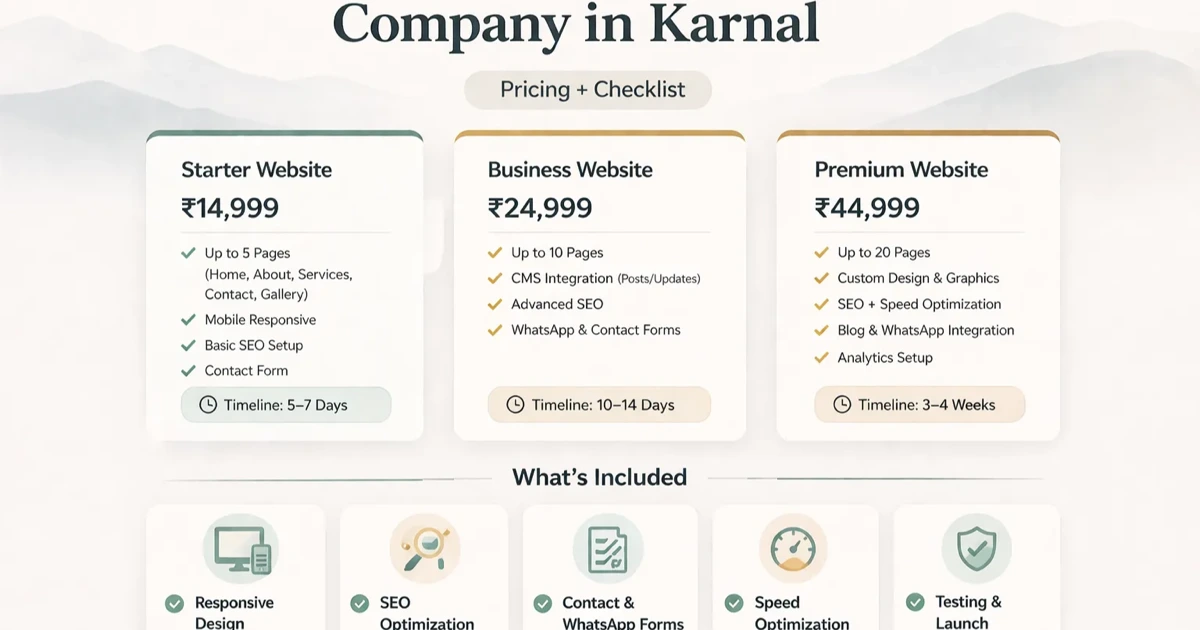
April 5, 2026
Plan a Karnal agri or dealer website with product categories, seasonal enquiry routes, RFQ inputs, documents, coverage, ownership, and acceptance checks.
Read article
March 23, 2026
Plan a Meerut manufacturer or distributor website with product families, dealer qualification, RFQs, service coverage, evidence, tracking, and ownership.
Read article