
May 21, 2026
Static vs WordPress vs Cloud Hosting in India
Compare static, WordPress and cloud hosting for an Indian business website by editing needs, application features, maintenance, ownership and risk.
Read articlePublished Updated
Compare Vercel, Hostinger, and AWS by application type, deployment control, databases, scaling, support, security ownership, cost risk, and team capability.
Vercel, Hostinger, and Amazon Web Services solve different hosting problems. Vercel is a developer platform strongly aligned with modern frontend and Next.js delivery. Hostinger offers managed website, WordPress, VPS, and cloud-hosting products aimed at simpler administration. AWS provides a broad cloud platform where teams can assemble infrastructure with much more control and responsibility.
The right choice depends on the application architecture, database and background work, traffic pattern, team capability, compliance needs, support expectations, and tolerance for operational complexity. Comparing only the advertised monthly price can produce the wrong decision because the service boundary is different on each platform.
Prices, limits, included usage, and product names change. Verify the current Vercel plans, Hostinger India plans, and relevant AWS pricing before approval.
| Decision area | Vercel | Hostinger | AWS |
|---|---|---|---|
| Typical fit | Next.js/frontends and web deployments | Business websites, WordPress, managed hosting, VPS | Custom cloud systems and infrastructure |
| Initial setup | Low for supported frameworks | Low for managed website products | Low to high depending on service design |
| Infrastructure control | Opinionated platform controls | Managed controls or VPS access | Broad service and network control |
| Operations burden | Platform handles much of delivery | Provider handles managed-plan basics | Customer team owns architecture and operations |
| Scaling model | Usage and platform limits | Plan resources and upgrades | Service-specific scaling and configuration |
| Database | Usually external/integrated service | Available through selected products | Multiple managed and self-managed choices |
| Background jobs | Architecture-dependent | Limited or VPS-dependent | Many queue, function, container, and server options |
| Best buyer | Product/frontend team | Small business or agency with common needs | Team with cloud engineering capability |
This table is directional. A WordPress site on AWS, a custom application on a Hostinger VPS, or an API-backed product on Vercel can all be valid when the architecture and operating ownership are explicit.
Describe the workload before naming a platform:
A five-page business website and a multi-tenant SaaS application do not need the same hosting decision.
Vercel is often useful when the product uses Next.js or another supported frontend framework, the team wants Git-based preview deployments, and the application can operate within the platform's execution and usage model.
Potential strengths include:
Questions to confirm:
Vercel can be a strong delivery layer without being the only system involved. A production application may still depend on a separate API, database, media storage, monitoring, and transactional services.
Hostinger can suit a small business that needs a conventional website or WordPress setup with a simpler control panel and a managed support boundary. It may also offer VPS or cloud products for teams needing more server control.
Potential strengths include:
Questions to confirm:
Shared or managed hosting should not be treated as interchangeable with a programmable cloud platform. It can be the better choice when the workload is conventional and the business values simple administration over infrastructure flexibility.
AWS is a broad cloud platform rather than one hosting package. A team can use Lightsail for a simpler virtual-server bundle, EC2 for virtual machines, S3 and CloudFront for static delivery, managed databases, containers, serverless functions, queues, monitoring, identity controls, and many other services.
Potential strengths include:
Questions to confirm:
AWS can be appropriate for a complex system, but using more services is not automatically better. Amazon's Lightsail pricing illustrates a simpler bundled model; broader AWS architectures require service-by-service costing.
A mostly static website with forms, analytics, and a CMS may work well on managed hosting or a modern frontend platform. The decision should consider editorial workflow, deployment ownership, form delivery, backups, and support rather than expected traffic alone.
The frontend may deploy on Vercel while the API, database, files, and background jobs run elsewhere. Confirm authentication cookies, CORS, environment separation, timeout behavior, and monitoring across both providers.
A managed Hostinger WordPress plan may reduce administration. AWS can host WordPress too, but then architecture, patching, backups, security, and performance ownership must be clear. The right answer depends on internal capability and required controls.
A role-based application may need an API, PostgreSQL, document storage, jobs, backups, audit logs, and monitoring. Compare the complete web application architecture, not just where the frontend files are served.
Estimate the same components for each option:
| Cost component | Questions |
|---|---|
| Compute and delivery | What traffic, execution, storage, and bandwidth are included? |
| Database | Is it included, external, managed, replicated, and backed up? |
| Files and media | Where are uploads stored and delivered? |
| Build and deployment | Are preview and production build minutes limited? |
| Security | Who manages certificates, firewall, identity, patches, and secrets? |
| Observability | Are logs, metrics, uptime checks, and retention included? |
| Recovery | What backup, restore, and disaster-recovery work is required? |
| Support | Which support level and response expectation apply? |
| Engineering | How much setup, maintenance, and incident time does the team own? |
| Growth | What happens when usage exceeds the planned tier? |
Convert foreign-currency estimates using a documented planning rate and add applicable taxes or payment charges separately. Avoid publishing one INR figure as a permanent platform price.
All three providers secure their own platform layer, but the customer still owns application configuration and data use within the chosen service boundary.
Depending on the setup, customer responsibilities can include:
A managed plan reduces some operational work; it does not make an insecure application secure.
Before approval, document:
Provider features can create valuable speed and reliability. Lock-in becomes a business problem when ownership and exit paths are unknown, not simply because a platform-specific feature exists.
Hosting affects performance, but it is not the only factor. Large images, third-party scripts, render-blocking CSS, database queries, cache rules, API latency, fonts, and application JavaScript can dominate load time.
Define measurable targets for important routes and test realistic devices and networks. The business hosting guide and web-app performance checklist cover decisions beyond the provider name.
In our implementation work, VASUYASHII chooses hosting after mapping the runtime, database, files, jobs, integrations, traffic, recovery, and team ownership. We do not recommend AWS merely because a project is important, Vercel merely because it uses Next.js, or a managed host merely because the entry plan is inexpensive.
For a website, we prioritise simple ownership, reliable deployment, backups, and support. For custom software, our software development service documents the full environment and recovery boundary before production handover.
Vercel may provide a simpler Next.js delivery workflow, while AWS offers more infrastructure choices. The better option depends on backend services, control, operating skill, usage, support, and recovery requirements.
It can be suitable for a conventional business or WordPress website when the selected plan supports the workload and the business confirms backups, limits, support, renewals, security ownership, and account access.
There is no universal cheapest option because the service boundary differs. Compare the complete system and twelve-month operating cost, including database, files, bandwidth, engineering, backup, monitoring, support, and taxes.
Yes. This is common, but authentication, latency, CORS, monitoring, data regions, environment configuration, and incident ownership must be designed across the providers.
Only when the workload or control requirements justify it and someone can operate the environment. A simpler managed platform can be safer for a standard website with limited technical ownership.
Review at renewal, after meaningful architecture or traffic change, after incidents, and when usage trends approach plan limits. Avoid migrating solely because another platform has a temporary promotion.
Write the workload, data stores, jobs, traffic, recovery need, and account owner on one page. Compare complete annual costs and responsibilities using current official plan pages. Contact VASUYASHII for a hosting and deployment review tied to the actual application architecture.
Related Articles
May 21, 2026
Compare static, WordPress and cloud hosting for an Indian business website by editing needs, application features, maintenance, ownership and risk.
Read article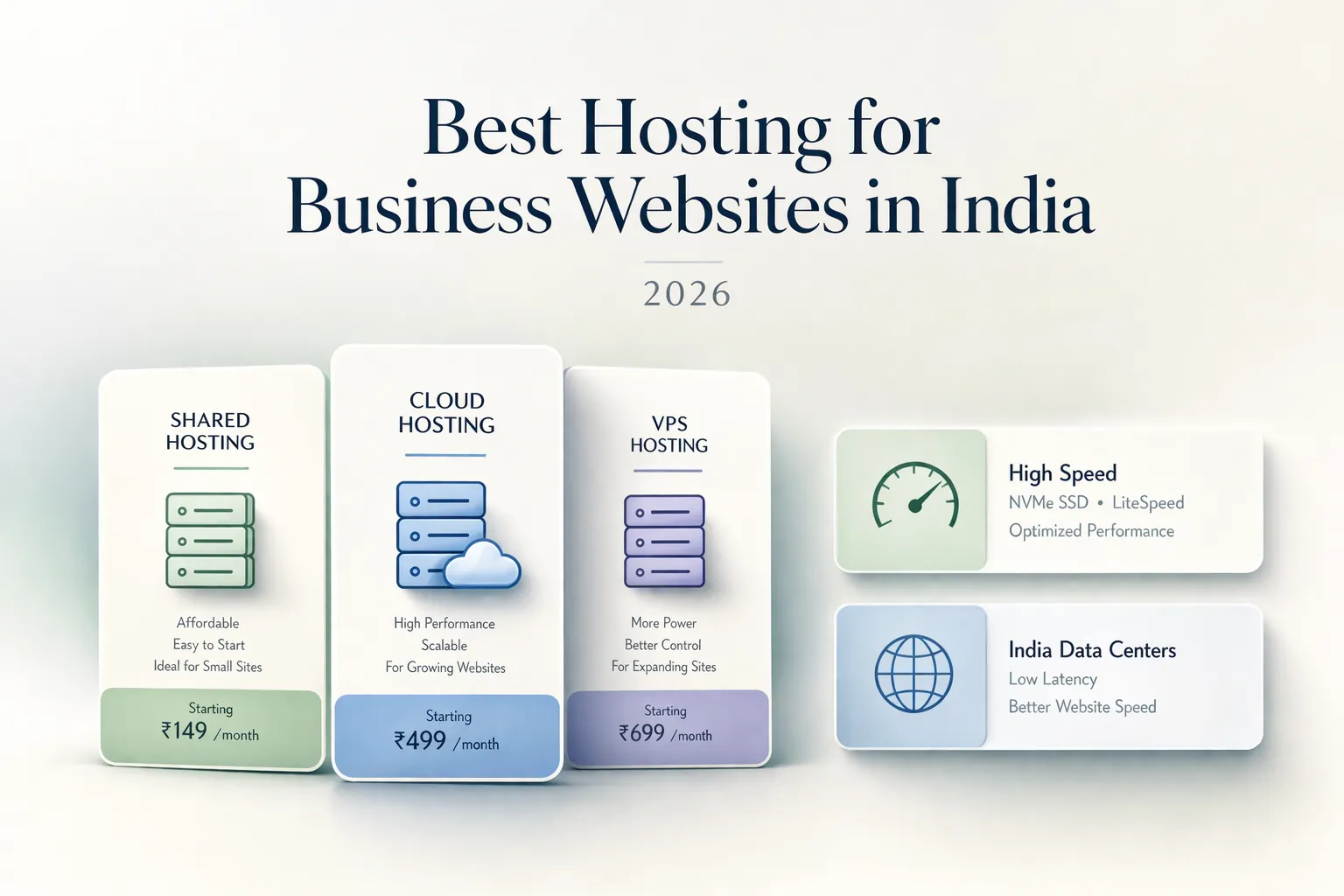
March 30, 2026
Choose business hosting in India by workload, region, backups, security, support, staging, ownership, migration, email boundaries, and total cost.
Read article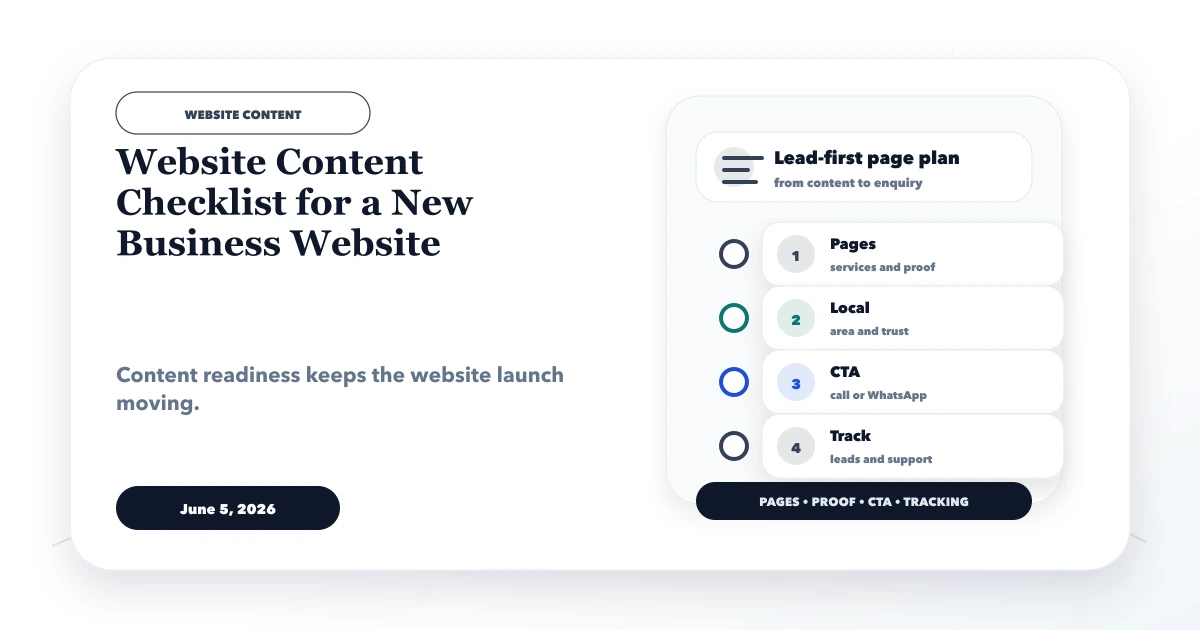
June 5, 2026
Prepare accurate website content for a new business: services, proof, process, FAQs, images, contact details, SEO fields, policies, and ownership.
Read article
May 30, 2026
Business website maintenance services in Delhi NCR guide with updates, backups, speed, security, SEO checks, pricing, and monthly checklist.
Read article