
May 22, 2026
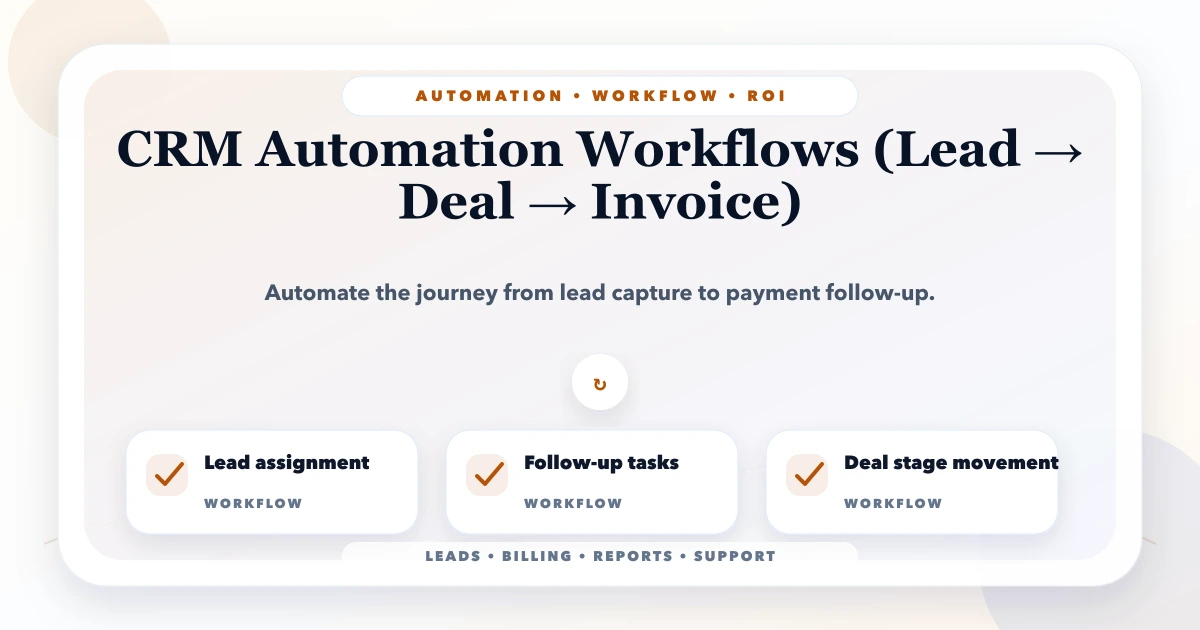
CRM Automation: Lead to Deal to Invoice
Design a reliable CRM workflow from lead capture to deal, quotation, invoice, payment, handoff, retries, approvals, and sales reporting.
Read articlePublished
CRM automation workflows for sales with lead routing, follow-up rules, task logic, reporting, pricing, and implementation guidance for SMBs.
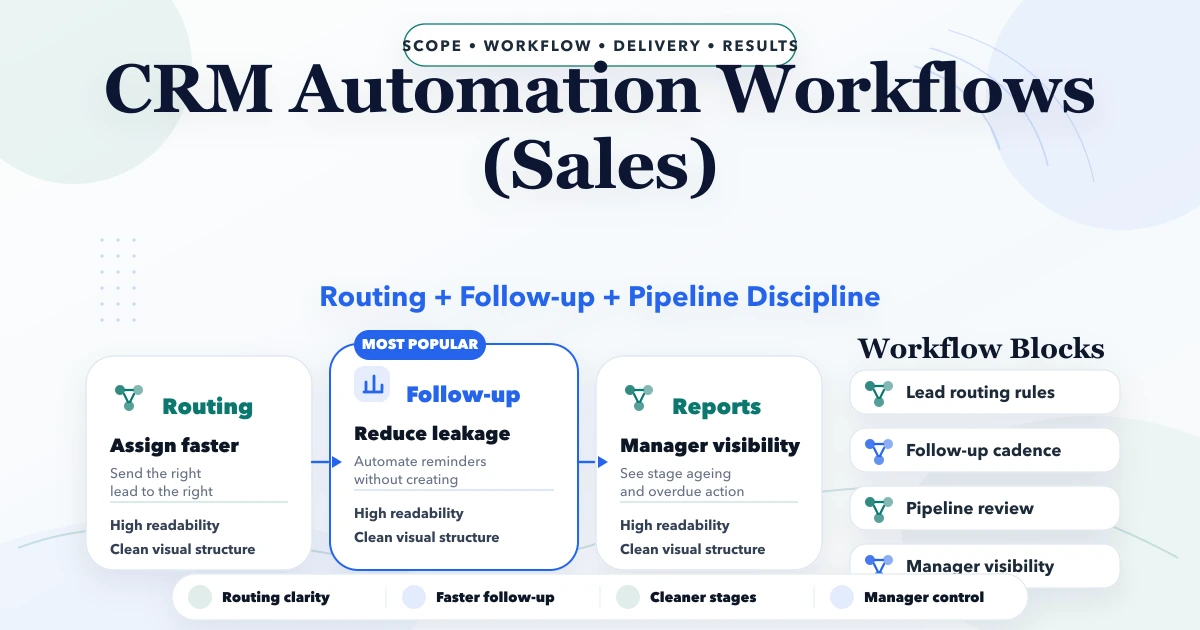
CRM automation workflows sales matters for sales teams and founders who want cleaner follow-up, task discipline, and better pipeline visibility. This guide is written for Indian SMBs that want clearer decisions, fewer implementation mistakes, and a practical plan before they spend on software. The goal is not to use more software words. The goal is to understand what to build first, what to delay, how much to budget, and what usually goes wrong in real implementations.
If a business is still running key workflow decisions from Excel, WhatsApp, memory, or repeated status calls, then the timing of software decisions starts affecting cash flow and team efficiency directly. That is why this topic should be treated as an operational decision, not only a technology purchase.
By Tushar C. (Founder, VASUYASHII). Reviewed by VASUYASHII Editorial for practical scope, pricing, implementation clarity, and local business relevance.
Good CRM automation workflows reduce follow-up leakage, stage confusion, and manager dependency on verbal updates. Bad automation does the opposite: it creates noise, duplicate reminders, and false confidence from poor data.
| Scope | Price range | Timeline |
|---|---|---|
| Basic CRM workflow automation | ₹60,000 to ₹1.5 lakh | 2 to 5 weeks |
| CRM workflows + reporting + channels | ₹1.5 lakh to ₹3.5 lakh | 5 to 10 weeks |
| Custom CRM automation stack | ₹3.5 lakh to ₹7 lakh+ | 8 to 16 weeks |
The strongest first step is usually not the biggest software plan. It is the clearest phase-one scope with measurable operational value. That keeps cost sane, adoption realistic, and future expansion easier.
For many SMBs, software decisions are really decisions about process discipline. If the team follows inconsistent steps, the software will reflect that confusion. If the team agrees on data, ownership, and stages, even a modest first release can create fast clarity.
The financial side matters too. Delay in billing, missed follow-up, weak inventory visibility, and no manager-level reporting all have a real cost. Many businesses underestimate this cost because the pain is spread across people and time rather than appearing as one direct invoice.
A useful first version should remove repeated manual work, make status visible, and reduce dependency on one person’s memory. When a system does that well, teams adopt it faster because the value becomes visible in daily work, not only in a demo.
Pricing changes based on roles, modules, integrations, data migration, and reporting depth. Businesses often compare quotes only on feature count, but that is rarely enough. Two systems with the same high-level module names can have very different implementation effort depending on the workflow behind them.
| Scope | Price range | Timeline |
|---|---|---|
| Basic CRM workflow automation | ₹60,000 to ₹1.5 lakh | 2 to 5 weeks |
| CRM workflows + reporting + channels | ₹1.5 lakh to ₹3.5 lakh | 5 to 10 weeks |
| Custom CRM automation stack | ₹3.5 lakh to ₹7 lakh+ | 8 to 16 weeks |
The practical way to budget is phase-wise. Decide what must work first, what can wait, and what depends on cleaner data or stronger adoption later.
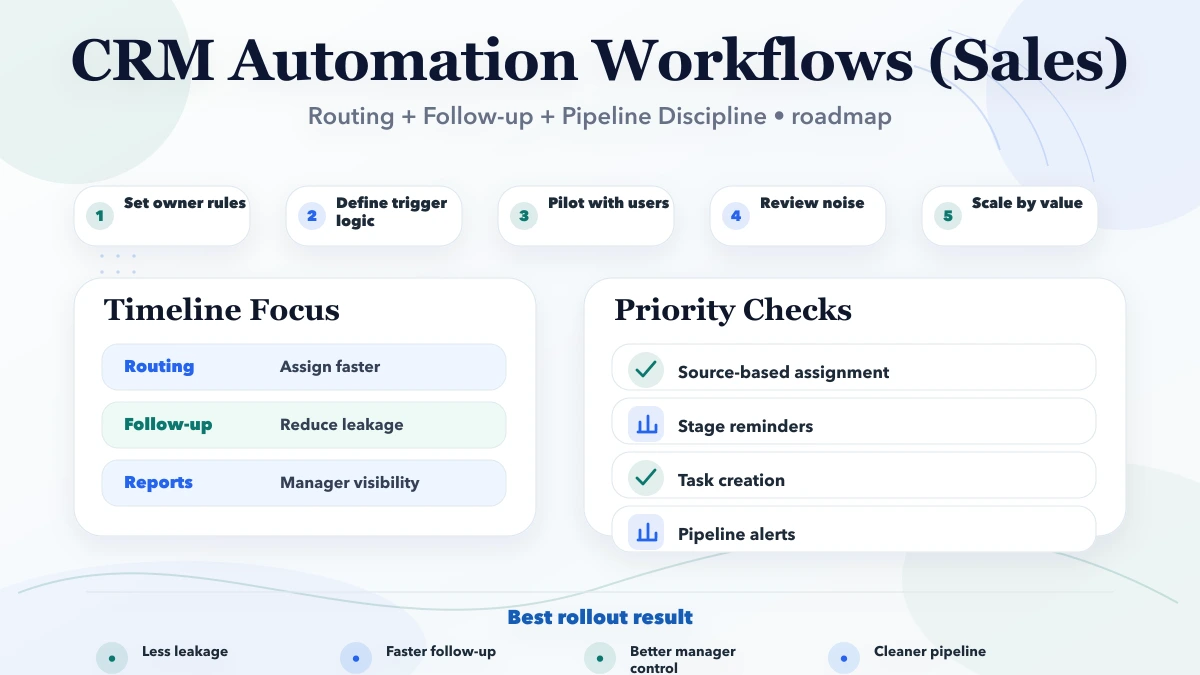
A rollout becomes smoother when every phase has a business owner, a measurable output, and clear review points. When implementation runs without those anchors, even good software teams end up burning time on avoidable confusion.
A practical software build for SMBs usually depends on a stack that supports workflow control, reporting, and future change without becoming fragile:
The stack should serve the workflow, not dominate the decision. In many projects, data structure, role logic, and reporting design matter more than one specific framework choice.
If you define these drivers early, your quote becomes more honest and your implementation risk drops. If you ignore them, pricing either becomes artificially low or gets inflated later by change requests and hidden complexity.
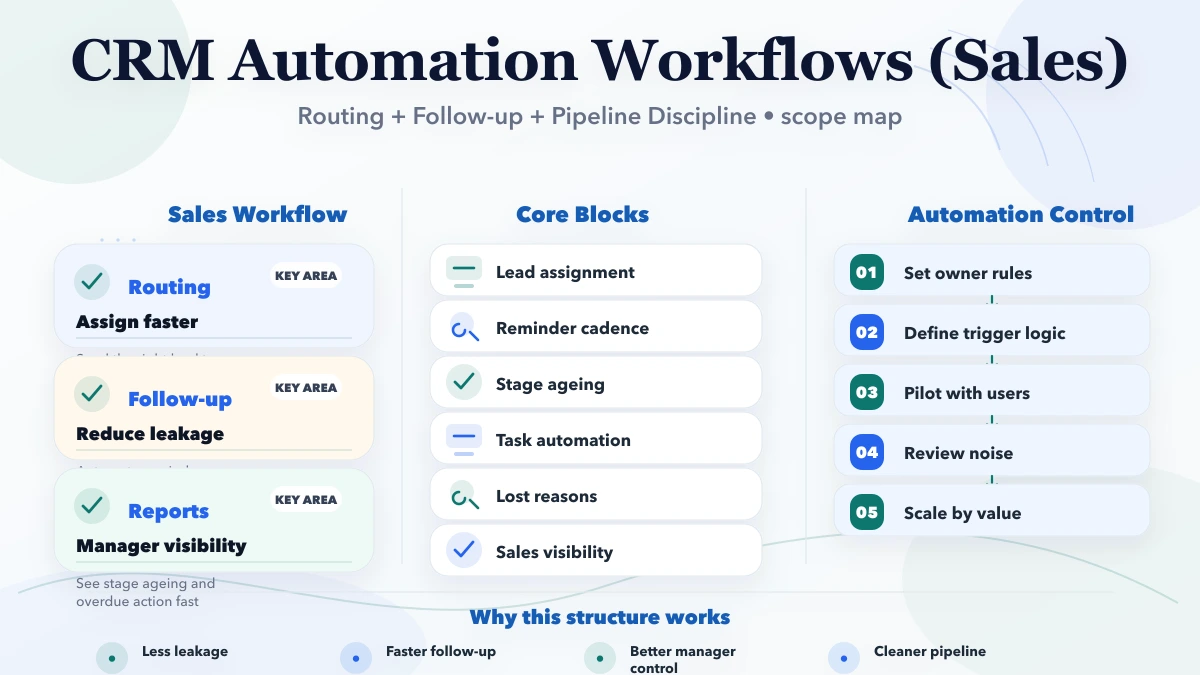
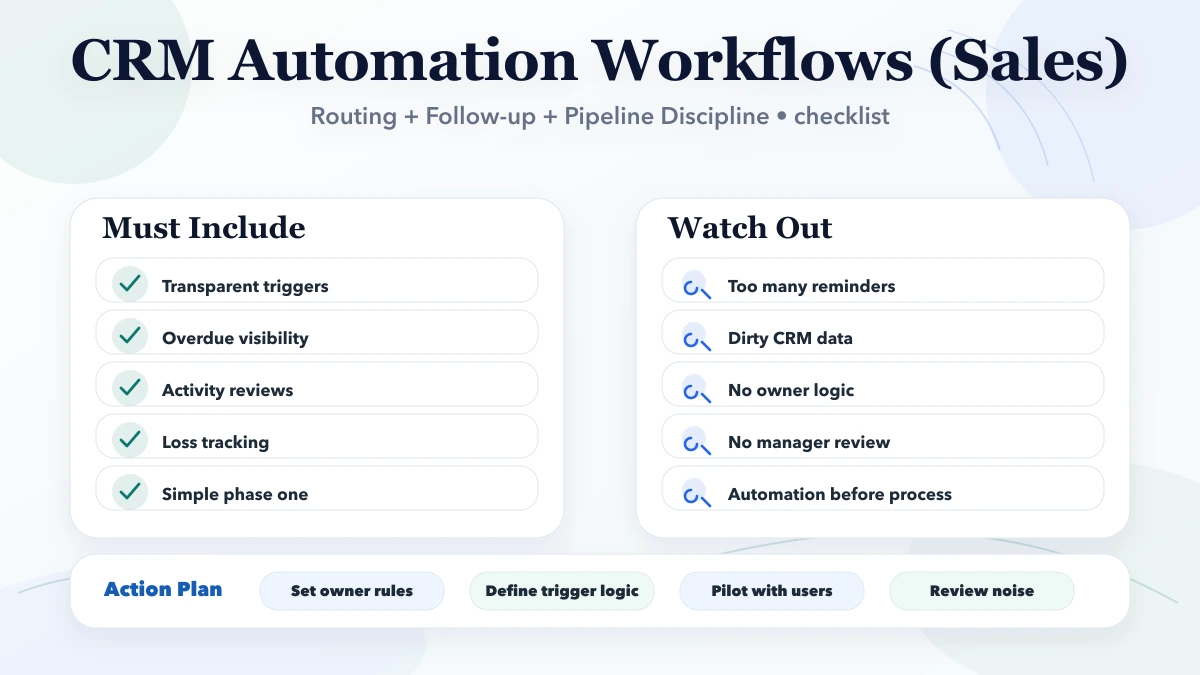
The first CRM automation workflows should save time without hiding the process from the team. Good early candidates are lead assignment by source or region, follow-up reminders after no response, automatic task creation after stage changes, and notification flows when high-value leads become inactive. These workflows improve discipline without making the CRM feel unpredictable.
Another strong automation is basic pipeline hygiene. For example, if a lead stays in the same stage for too long, the CRM can flag it, notify the manager, or move it into a review queue. This helps prevent silent lead leakage, which is one of the most expensive problems in small-business sales teams.
Automation should be reviewed against measurable outcomes. Check overdue follow-up count, response speed, lead-to-meeting conversion, stage velocity, and reassignment quality. If automation exists but these metrics do not improve, the logic may be wrong or the team may not trust the process yet.
The goal is not to automate everything. The goal is to automate the most repeated low-value actions while keeping ownership and decision visibility strong.
The first version of sales automation should stay easy to explain. If users cannot understand why a task, reminder, or assignment appeared, they stop trusting the system. That is why the first automation layer should be transparent, limited, and reviewed with real users before it expands.
Strong guardrails include simple trigger logic, clear ownership, visible due dates, and dashboards that let managers see whether the automation is helping or just producing noise. These guardrails protect the CRM from becoming another layer of work instead of a reduction in work.
Most software disappointment comes from weak scoping and weak rollout discipline, not from the idea of custom software itself.
If you are serious about implementation, start by writing the current workflow, the repeated pain, the roles involved, and the reports the owner wants every week. That single step makes good software planning dramatically easier.
Start with owner assignment, follow-up reminders, and overdue activity visibility. These usually create the fastest operational improvement and expose process gaps early.
Not always. Too much automation creates noise. The best workflows automate the actions that are repetitive, high-impact, and easy to validate with clean data.
Check overdue follow-ups, response times, stage ageing, conversion rates, and lost reasons. If those metrics improve without creating extra confusion, the workflow is likely helping.
Yes, but only with control. WhatsApp reminders, follow-up nudges, and template messaging can help when linked carefully to CRM stages and ownership.
Yes, especially when founders or managers are still manually chasing every lead. Even simple automation can improve discipline and reporting quickly.
Dirty data, vague stage definitions, and no one reviewing trigger logic are the biggest causes. Automation is only as good as the workflow underneath it.
Yes. In fact, that is often safer. Launch the base CRM first, prove adoption, then add automation with cleaner data and clearer behaviour.
If you want a practical software plan instead of vague feature promises, share your workflow and we will map the first useful version, timeline, pricing, and rollout sequence clearly.
Related Articles
May 22, 2026
Design a reliable CRM workflow from lead capture to deal, quotation, invoice, payment, handoff, retries, approvals, and sales reporting.
Read article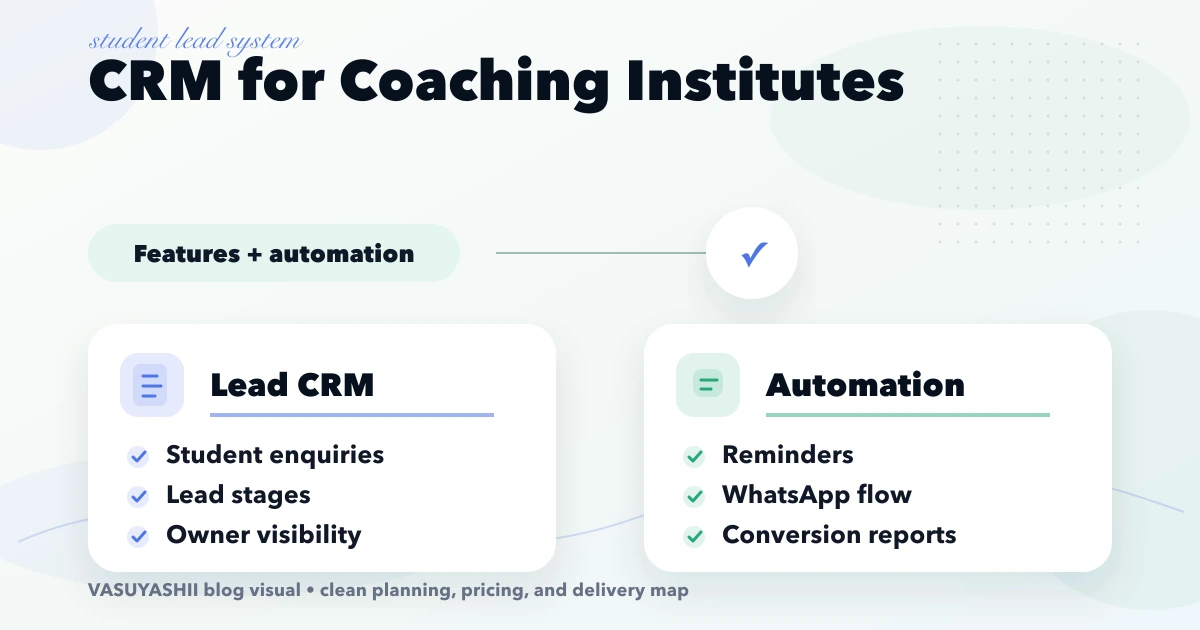
April 18, 2026
Plan a coaching institute CRM for enquiries, counsellor ownership, demo classes, follow-ups, WhatsApp consent, admissions, source tracking and reports.
Read article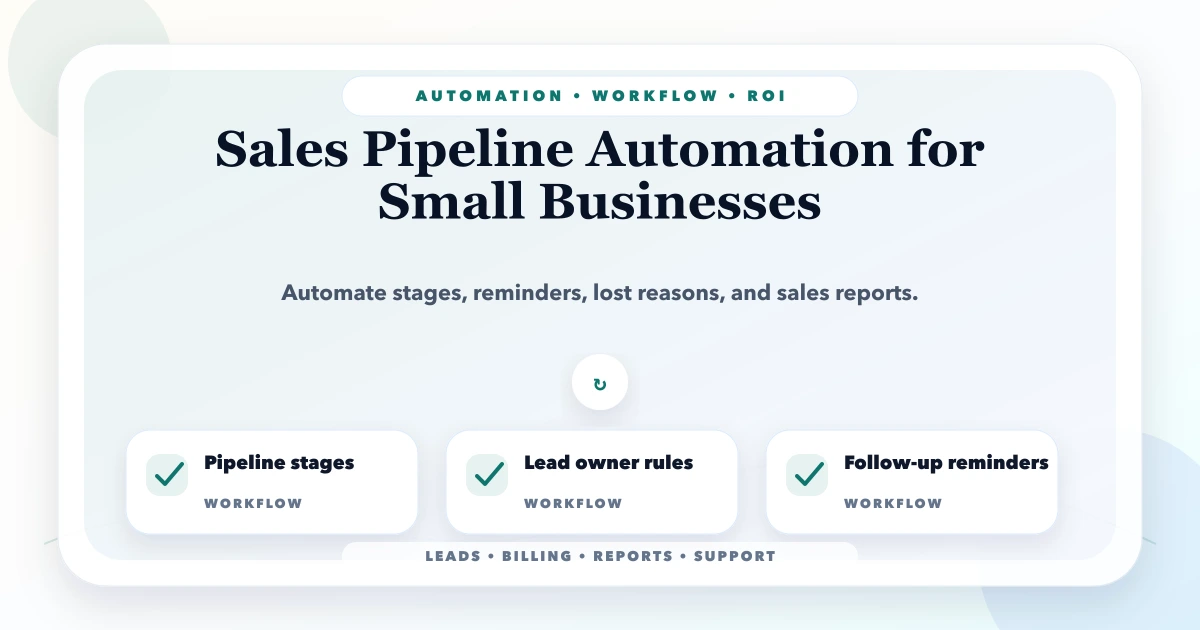
May 22, 2026
sales pipeline automation for small businesses: practical 2026 guide with examples, INR cost, workflow setup, timeline, mistakes, FAQs, and Indian SME tips.
Read article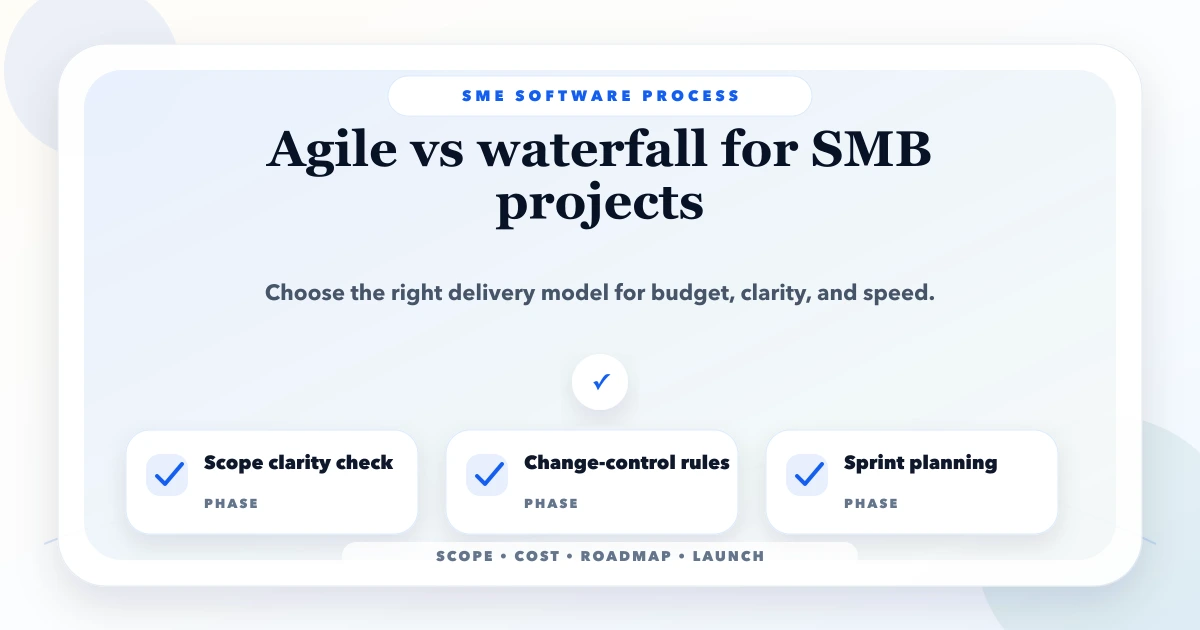
May 19, 2026
Compare Agile, Waterfall and hybrid delivery for SMB software projects using requirement stability, budget, review capacity, risk and acceptance needs.
Read article