
March 21, 2026
Website Development Process: Planning to Launch
Website development process explained for 2026 with discovery, sitemap, wireframes, UI design, SEO setup, speed, QA, launch, and maintenance.
Read articlePublished Updated
Plan a Faridabad industrial AMC website with equipment scope, site-audit requests, maintenance coverage, safety documents, renewals, and lead routing.
Service-area note: VASUYASHII is based in Delhi NCR and supports businesses remotely across India. A city-focused guide describes service and planning context; it does not claim a physical office in every location mentioned.
Explore the parent topic: Website Development Delhi NCR Hub →An industrial maintenance provider comparing website development companies in Faridabad needs to explain more than a list of services. A prospective buyer must understand equipment coverage, preventive versus breakdown support, inspection requirements, exclusions, documentation, and how an annual maintenance proposal is prepared.
This guide focuses on industrial AMC and maintenance-enquiry websites. It does not imply that every Faridabad business is industrial or that VASUYASHII has a local office or client there.
For each service, state:
Avoid “complete maintenance solution” unless the coverage is explicitly defined.
| Enquiry type | Website action | Information needed |
|---|---|---|
| Preventive service | Request assessment | Equipment, count, current schedule |
| Breakdown support | Check serviceability/call | Equipment, symptoms, site, urgency |
| Annual maintenance | Request site audit | Asset list, locations, desired coverage |
| Compliance inspection | Request scope review | Standard, document, due date |
| Existing contract | Contact support | Contract/account reference through secure route |
A new marketing form should not expose existing customer records or accept confidential plant documents without controls.
Create pages by meaningful equipment family or maintenance problem. Include:
Do not create thin pages for every model number. Use structured tables or filters when buyers need to compare supported equipment.
Imagine a provider receiving messages such as “send AMC rate.” The team cannot quote until it knows the number of assets, condition, location, service frequency, and parts responsibility.
A focused website can:
The site improves qualification without publishing one misleading rate.
Useful fields:
Large asset files or drawings should use a controlled later exchange. If uploads are enabled, define type, size, storage, access, and deletion.
An AMC page should distinguish:
Do not call a response time an SLA unless it is contractually defined and operationally achievable.
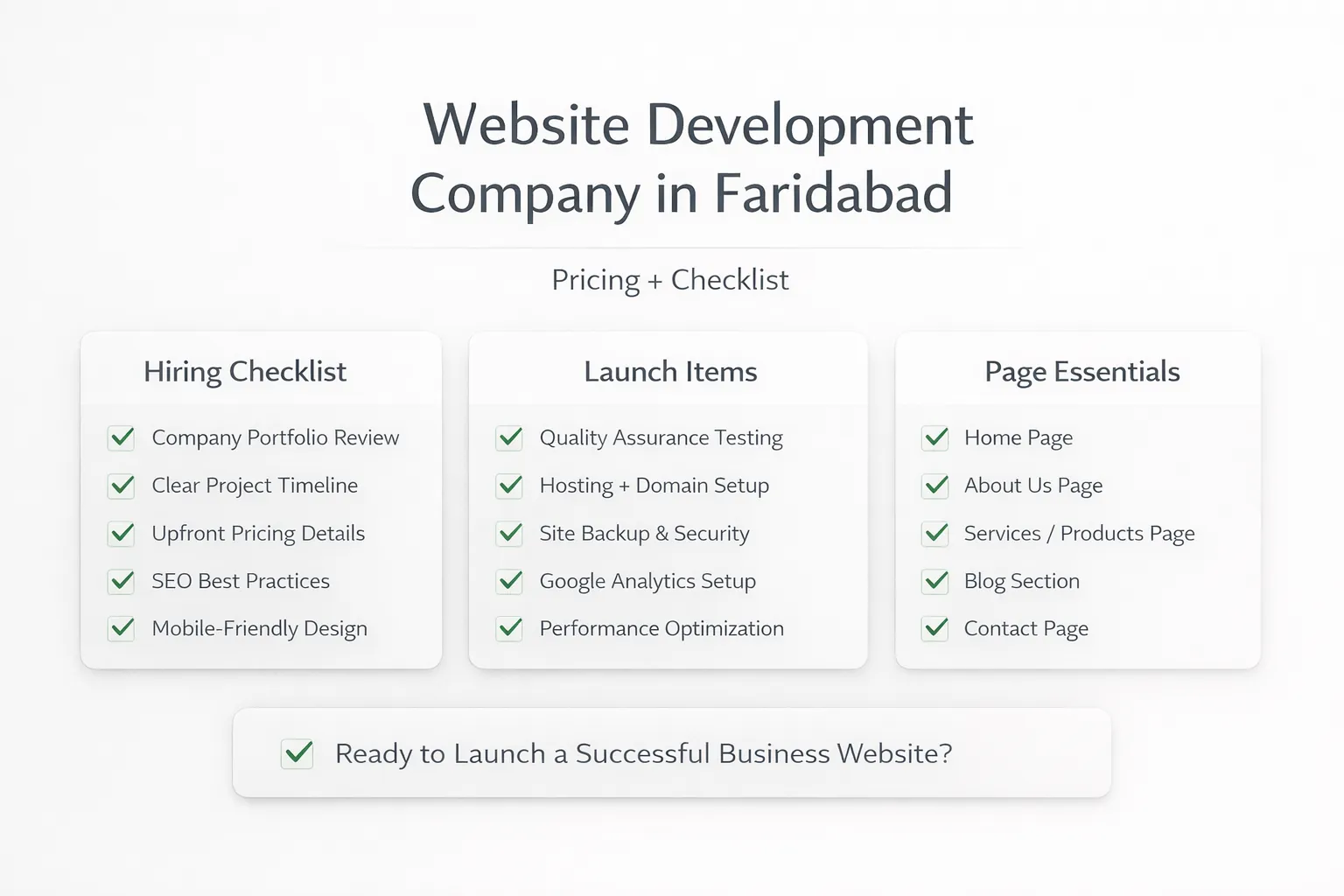
Potential documents include:
Publish only current, approved versions. Mark revision dates and assign an owner. Site-specific permits, customer documents, and confidential records should not be public.
The public website can provide:
Do not expose contract status, equipment history, or service reports without authentication. A customer portal may be a later web application phase.
Define:
Use an acknowledgement that says the request is under review. Record why leads are declined, such as unsupported equipment, area, timeline, or contract model.
Before a proposal is prepared, technical and commercial owners should confirm:
The proposal should state assumptions and exclusions next to the price. A website lead becomes commercially useful only when these inputs can be confirmed.
For the website project itself, define acceptance:
AMC information changes as service coverage, staffing, equipment support, or commercial policy changes. Assign a review owner for coverage wording, response expectations, service intervals, report format, excluded equipment, document revisions, contact routes, and renewal process.
Do not publish customer-specific contract terms as a universal public promise. The website can explain available models while the signed proposal defines the actual commitment.
Before renewal season, verify that old offers and downloadable brochures match current scope. Retire superseded files and update internal links so buyers do not request a package that is no longer available.
Prepare:
This pack produces original, operationally useful content. It also makes quotation comparison more accurate than buying pages by count.
Use:
Avoid city pages that repeat the same equipment text. The service city page guide explains the doorway risk.
Track:
Keep customer names, phone numbers, asset details, and free text out of analytics.
Website cost changes with:
Separate the public website from service-management software. Use software development only when job assignment, asset history, contracts, or reports require controlled records.
Define equipment, coverage, contract types, documents, and owners.
Approve form fields, site-audit states, routing, and confirmation text.
Create service, AMC, document, and request templates.
Have a responsible subject owner verify claims, terms, and safety content.
Test requests end-to-end and review qualification gaps.
Current VASUYASHII service scope includes websites, integrations, and custom operational systems. The first release should solve qualification before adding a full field-service platform.
Review which equipment categories, contract types, and locations produce complete requests. Compare proposal conversion with incomplete, unsupported, duplicate, or no-response outcomes.
If many prospects ask the same scope question, improve the AMC page. If requests reach the wrong team, repair routing. If buyers upload sensitive files unnecessarily, change the guidance and secure the exchange. Use operational evidence before adding new landing pages.
Audit a small monthly sample of AMC and breakdown enquiries. Check whether each request identifies the equipment family, location, urgency, operating condition, existing contract status, and preferred contact route without asking the visitor for unsafe troubleshooting or unnecessary confidential details.
Compare the submitted information with what the service team actually needs before scheduling an assessment. Repeated clarification calls indicate missing page guidance or a weak form field; irrelevant submissions may indicate unclear service boundaries. Update the website from this evidence while keeping diagnosis, price, attendance time, and repair outcome subject to professional review. This connects content maintenance to service operations instead of judging the website only by form volume.
Show pricing only for standard, repeatable scope. Otherwise explain the factors and assessment process.
Not always, but complex or high-risk equipment often needs verification before a proposal.
Yes through a clear support route. Account-specific records require authentication and permissions.
Only documents owned or licensed for public use. Link manufacturer resources where appropriate.
Create pages for distinct equipment families or buyer problems, not every keyword variation.
It can support contact when monitored, but the business should define the information, hours, and status process.
Prepare one AMC coverage sheet and one site-audit checklist. Share the equipment families and lead route through contact for a focused website scope.
Related Articles
March 21, 2026
Website development process explained for 2026 with discovery, sitemap, wireframes, UI design, SEO setup, speed, QA, launch, and maintenance.
Read article
June 6, 2026
Compare Kavi Nagar Ghaziabad website quotes using page scope, content, technical delivery, ownership, recurring costs, maintenance, and acceptance.
Read article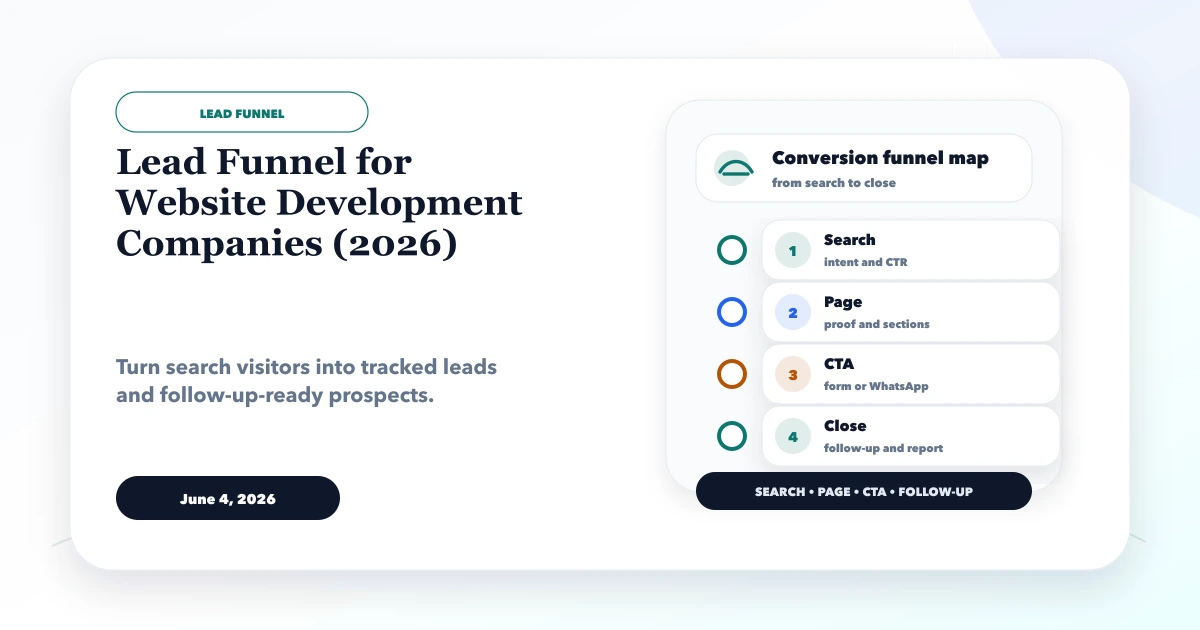
June 4, 2026
Build a website-development lead funnel from search intent and proof to qualification, discovery, proposal, follow-up, conversion tracking, and reporting.
Read article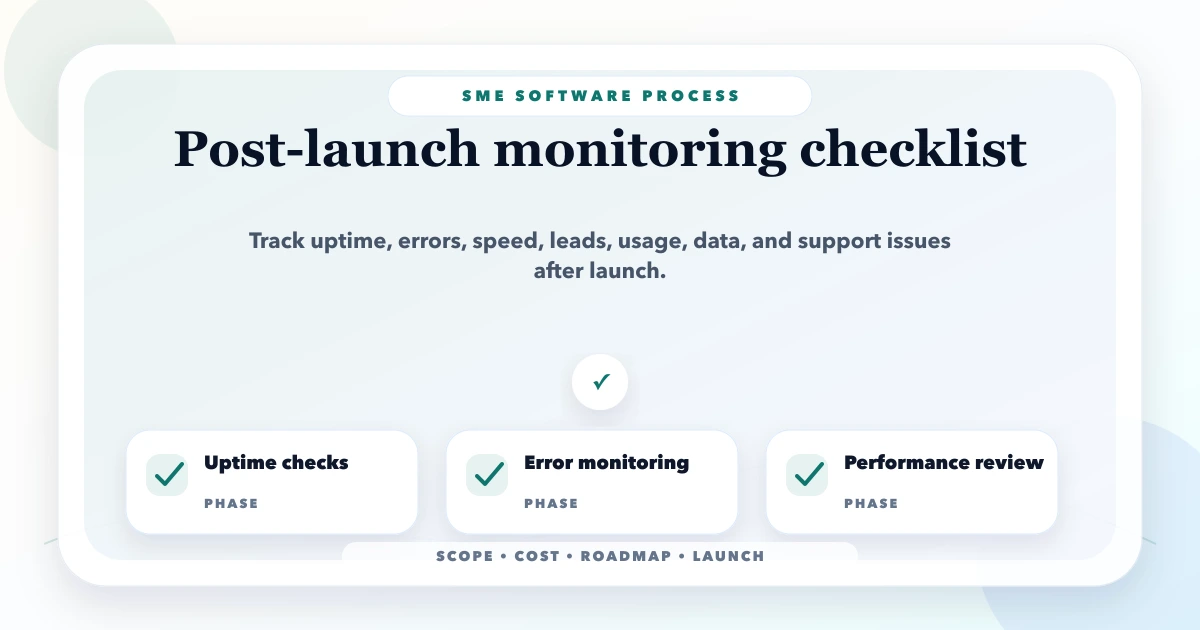
May 19, 2026
post-launch monitoring checklist: practical 2026 guide with phases, INR pricing, checklist, roadmap, mistakes, FAQs, and SME implementation tips today.
Read article