
May 27, 2026
Payment Gateway Integration (Razorpay/Stripe) for Websites
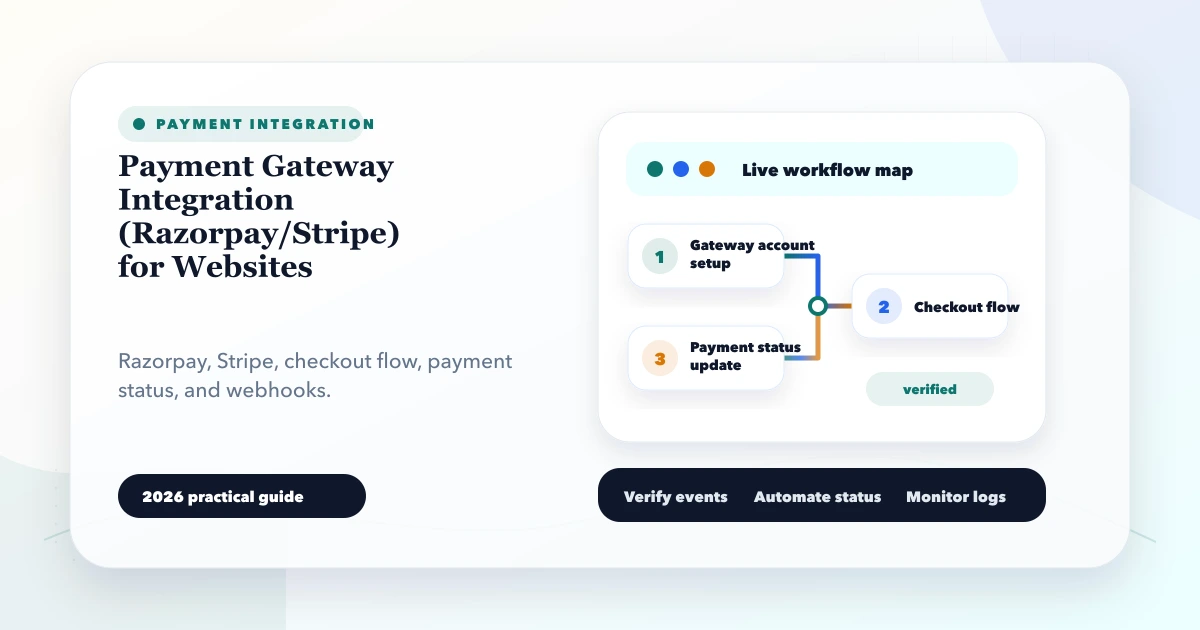
Plan Razorpay or Stripe website checkout with server-created orders, verified webhooks, idempotency, refunds, reconciliation, security and launch testing.
Read articlePublished Updated
Compare Razorpay, PhonePe PG, and PayU using current official pricing pages, onboarding, checkout, webhooks, refunds, settlements, support, and reconciliation.
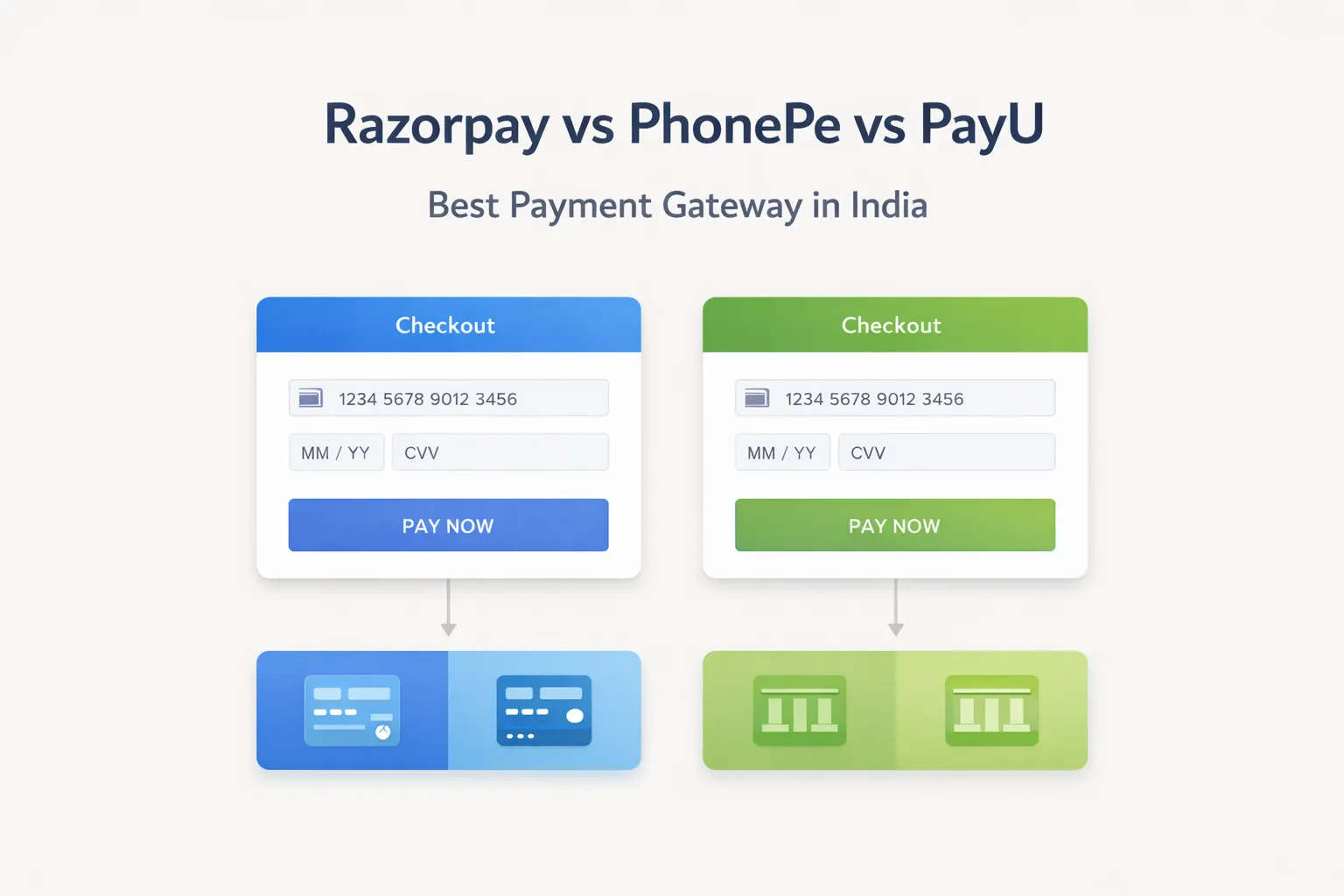
Choosing a payment gateway in India is not only about headline transaction fees. Founders and business owners usually compare platform fee percentages first, but real payment-gateway decisions should also consider onboarding, success rate, support, settlement experience, integration depth, and how easy the system is to operate after launch.
That is why comparing Razorpay, PhonePe, and PayU properly requires more than looking at one pricing line. Two gateways may look similar on fee, but behave differently in onboarding flow, product maturity, documentation, and business fit.
This guide compares Razorpay, PhonePe PG, and PayU from a practical business perspective. Pricing references were rechecked on official pages on August 3, 2026 and should still be confirmed during merchant onboarding.
For many businesses in India:
There is no single "best" gateway for everyone. The best option depends on your scale, integration needs, and operational priorities.
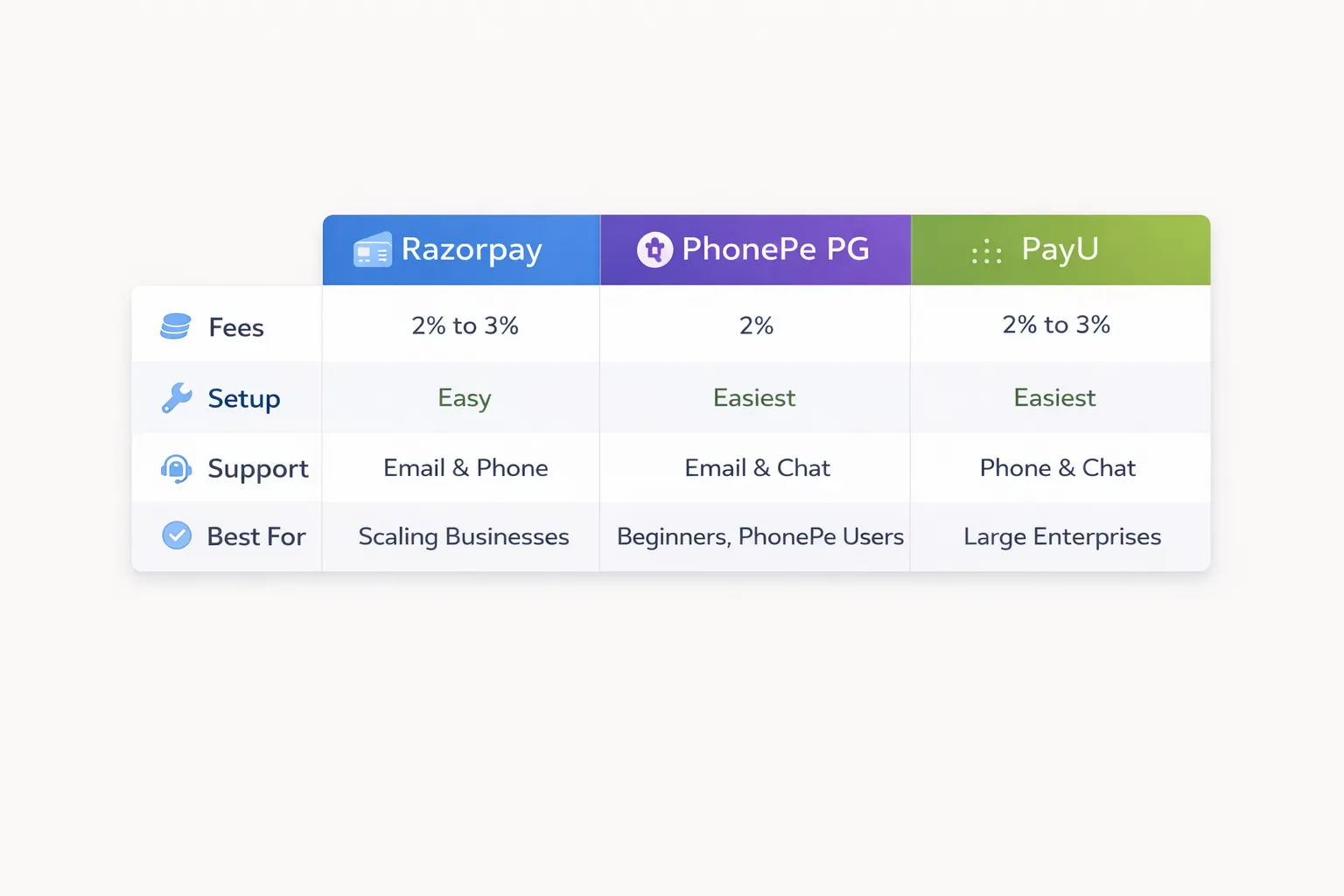
As of August 3, 2026, the public official pages showed changing promotional and standard pricing structures:
Razorpay's payment-gateway page advertised zero* platform fee for 90 days, with terms applying. The public promotion should not be treated as the permanent post-offer rate. Confirm payment-mode pricing, GST, settlement products, refunds and enterprise terms in the merchant agreement.
PhonePe's official pricing page displayed a Free* standard-plan promotion, a struck-through 1.99% reference, zero setup fee and zero annual maintenance fee, with terms applying. Confirm eligibility, duration and excluded services before estimating transaction cost.
PayU's official pricing page listed 2% for named domestic payment categories and 3% for named international or selected card/EMI categories, plus applicable GST. It also states that custom pricing and changes may apply.
Public pricing pages can change after this review. Obtain written commercial terms for your entity, industry, payment methods and volume before signing.
A gateway should not be chosen only by finance teams. Product and operations should care too.
How smooth is the customer-side payment journey? Friction at checkout directly hurts conversion.
Can the team understand transaction status, settlements, failures, refunds, and issues clearly?
This matters a lot if your storefront is custom and your tech team needs predictable implementation.
Operational reliability matters as much as fee percentage, especially once order volume grows.
UPI, cards, net banking, wallets, EMI, and other modes should fit your business model.
Related reading:
Fee percentage is the visible cost. Total operational cost is larger.
If one gateway is slightly more expensive on paper but easier to implement and operate, it may still be the better business choice.
In a product walkthrough, follow a sample payment from its source transaction to the payment record, status and resulting customer balance.
A gateway decision must include transaction-to-order mapping, payment records, refunds and reconciliation. This planning guide does not claim that VASUYASHII operates a payment gateway or that each listed provider is integrated into Business Suite.
| Stage | Buyer question | Integration evidence |
|---|---|---|
| Account onboarding | Is the entity and business model eligible? | Approved merchant account and enabled modes |
| Payment creation | Is amount/order created on a trusted backend? | Server-side request and stored provider ID |
| Customer checkout | Which methods and failure messages appear? | Test-mode device and method matrix |
| Confirmation | Is the browser return treated only as UX? | Verified API/webhook state transition |
| Webhook | Are signatures, duplicates and retries handled? | Signed-event tests and idempotency record |
| Refund | Who initiates and tracks it? | Full/partial refund test and status history |
| Settlement | Can finance match orders to funds? | Reconciliation export and exception queue |
| Support | Who owns customer and provider escalation? | Written escalation and evidence checklist |
The Reserve Bank of India describes payment aggregators and gateways as part of a wider transaction chain involving merchants, customers, banks, payment instruments and technology systems. Review current RBI payment-aggregator guidance with qualified payment and legal advisers for the actual business model.
The backend should not mark an order paid only because the user returns to a success page. Verify the provider response, validate webhook authenticity, process duplicate events idempotently and store provider identifiers without card credentials.
Test at least:
Use the payment webhook guide for a workflow-level checklist. Reconciliation must distinguish payment success, order fulfilment and bank settlement as separate states.
Create the same test plan for shortlisted gateways. Compare documentation clarity, sandbox behaviour, checkout on real mobile devices, enabled methods, webhook reliability, dashboard search, refund flow, export fields and support response. Record results instead of relying on brand familiarity.
If payment volume is high or downtime has material impact, review multi-gateway or routing options separately. Redundancy adds operational and reconciliation complexity; it is not a free reliability upgrade.
Payment gateway integration itself can be quick, but business readiness matters.
Custom checkout, subscription logic, or deeper order workflows can extend timeline.
Most payment integrations need:
For custom stores and apps, integration services become important because payment handling affects revenue directly.
If you are comparing payment gateways, do not choose only on the headline fee. Compare commercial terms, checkout flow, documentation, and operational fit together.
That depends on current eligibility, payment mix, volume, taxes and value-added services. Public promotions for Razorpay and PhonePe and published PayU rates were different on August 3, 2026, so compare written merchant terms rather than one screenshot.
For many startups and custom-product teams, yes, especially where documentation and ecosystem breadth matter.
No. Support, success rate, dashboard quality, and implementation fit matter heavily.
Yes. All major gateways may offer volume-based or custom pricing.
For standard platforms, sometimes not. For custom websites and apps, usually yes.
Choosing a gateway only on a pricing screenshot without checking the real operational fit.
Yes, but migration affects checkout, reconciliation, and internal processes, so it is better to choose carefully at the start.
Because gateway pricing and promotional offers can change. Using a dated snapshot avoids confusion.
If you want the payment stack to match your checkout flow, reporting needs, and business model, the next step is to compare gateway fit before you commit engineering effort.
Related Articles
May 27, 2026
Plan Razorpay or Stripe website checkout with server-created orders, verified webhooks, idempotency, refunds, reconciliation, security and launch testing.
Read article
June 9, 2026
Restaurant website with online payment setup guide covering menu, cart, checkout, Razorpay or Stripe, payment links, orders, and checklist.
Read article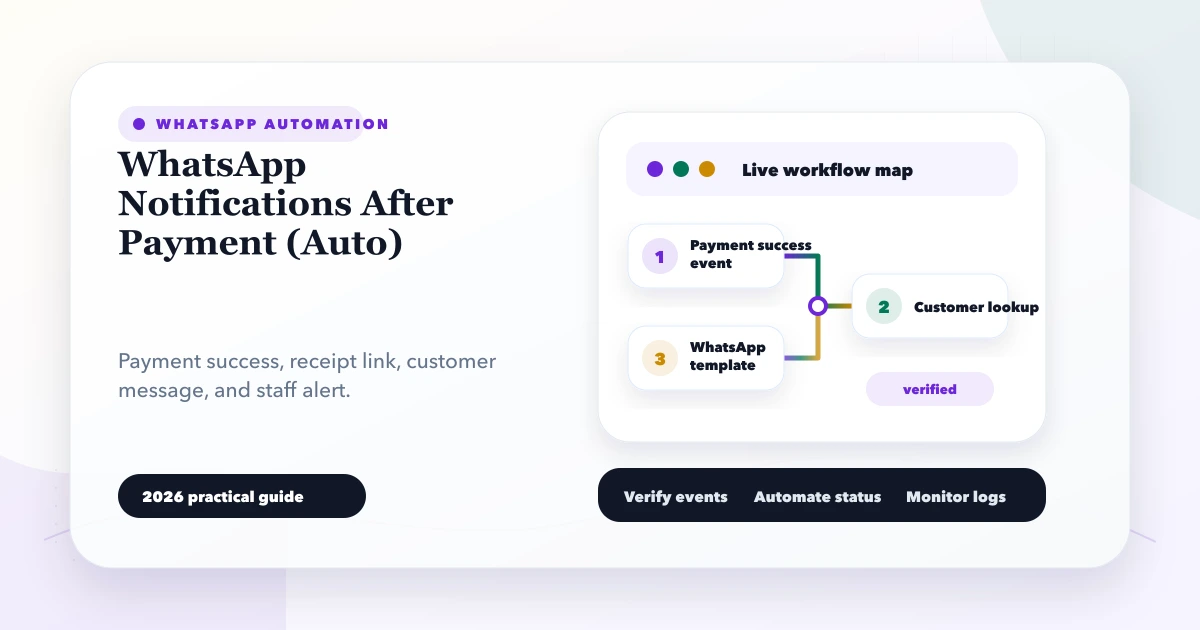
May 27, 2026
Automate WhatsApp payment confirmations with verified webhooks, approved templates, deduplication, secure receipt links, delivery tracking and fallbacks.
Read article
March 28, 2026
Ecommerce website developer in Delhi NCR: packages, setup steps, pricing, timeline, and what online stores should launch first in 2026.
Read article