
May 29, 2026
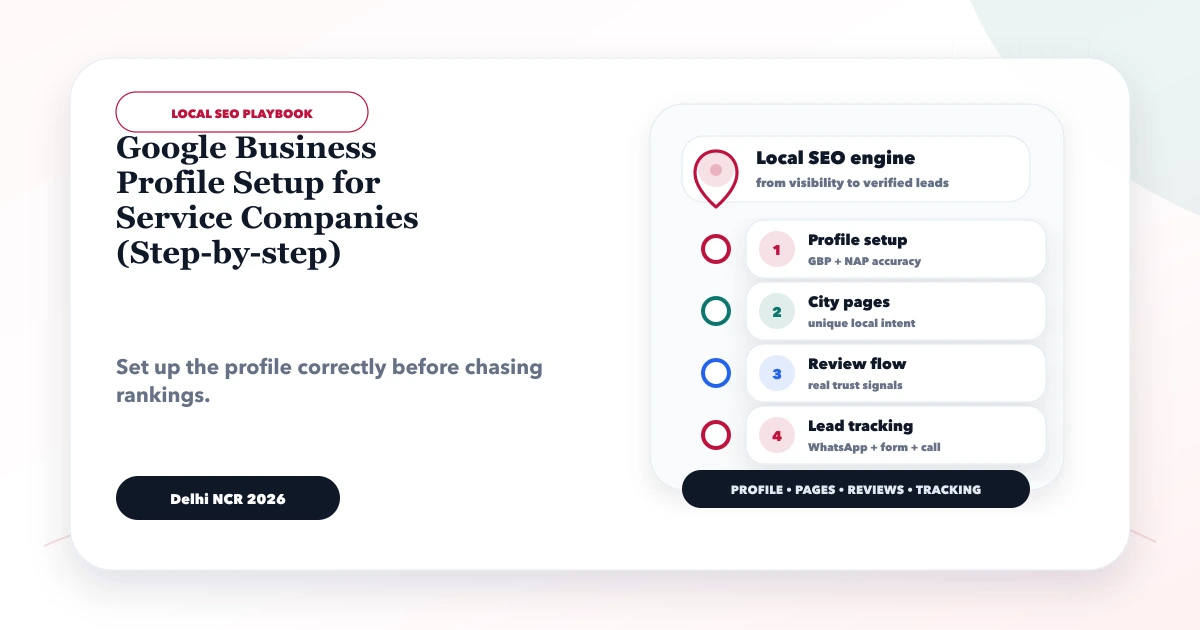
Google Business Profile Setup for Service Companies
Set up an eligible service-company Google Business Profile with accurate ownership, category, service area, contact details, verification, and review practices.
Read articlePublished Updated
Optimize an eligible web-service Google Business Profile with accurate categories, service areas, reviews, photos, landing pages, tracking, and monthly upkeep.
Google Business Profile optimisation is relevant only after eligibility and verification are established. Google's guidelines require eligible businesses to make in-person contact with customers during stated hours. An online-only web development, SEO, software, or design company should not create a false storefront, virtual office, or service-area profile only to rank locally.
For an eligible studio, office, or service-area business, optimisation means keeping identity, category, location or service area, hours, services, photos, reviews, website links, and customer responses accurate over time. It does not mean adding keywords to the business name or generating fake reviews.
By Tushar C. (Founder, VASUYASHII). Reviewed by VASUYASHII Editorial for real-world service website, SEO, analytics, and conversion implementation experience.
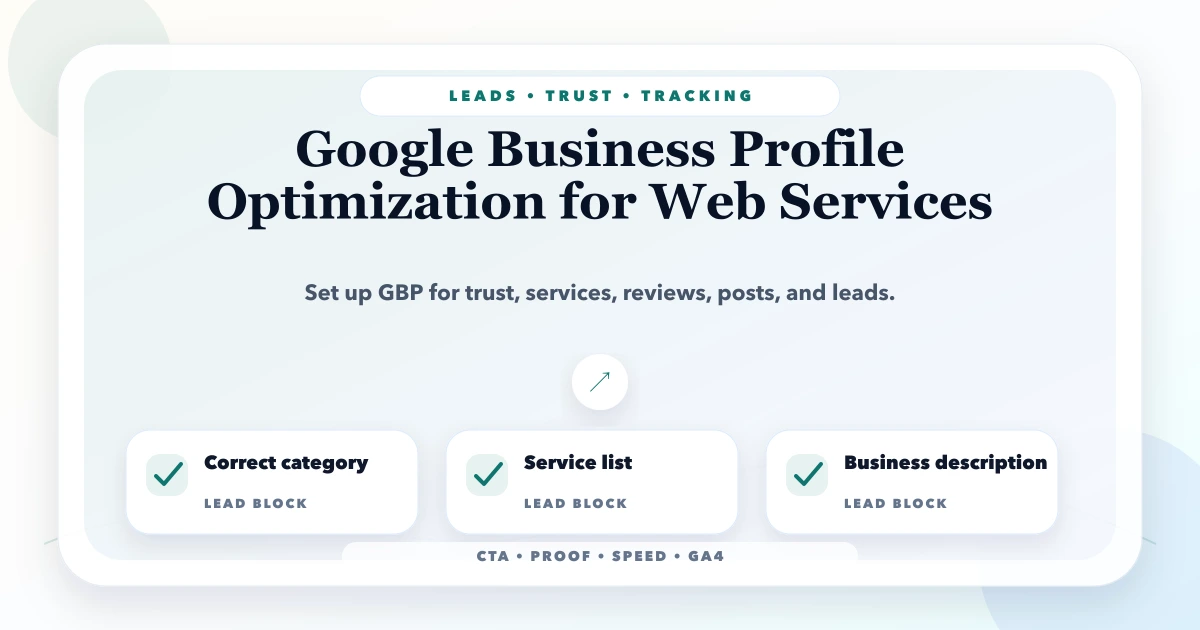
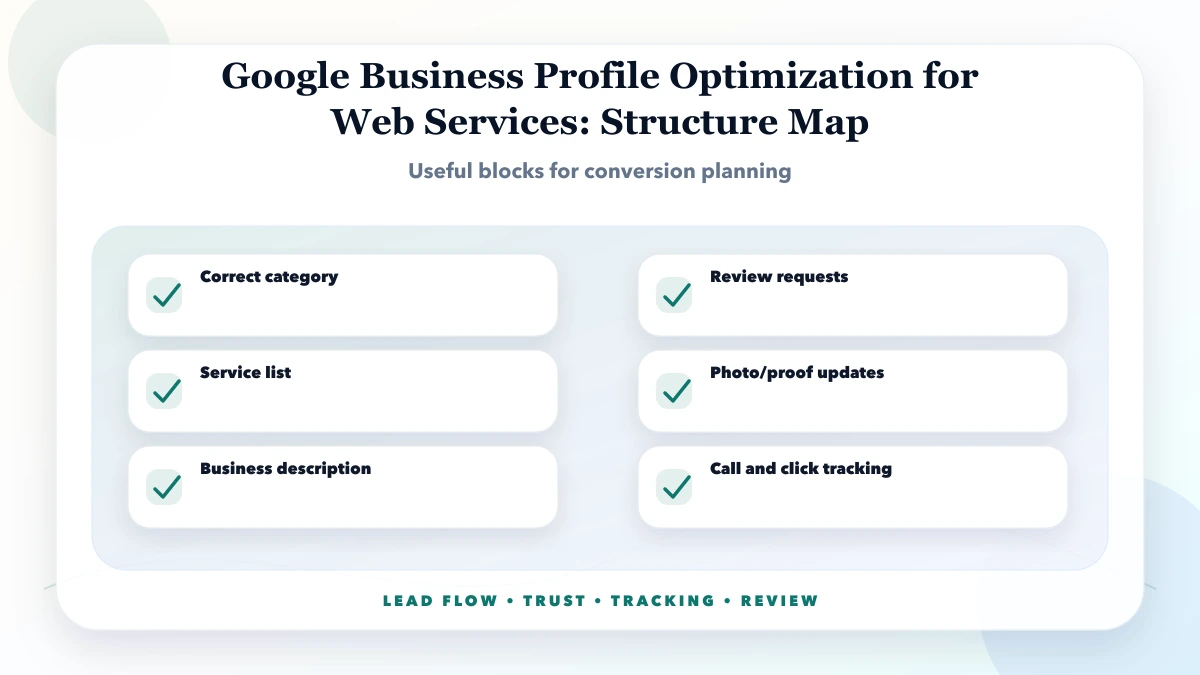
Google Business Profile optimization for web services means selecting accurate categories, adding services, writing a clear description, uploading proof, collecting reviews, posting updates, and tracking calls or website clicks.
For Indian service businesses, the best setup is usually practical and simple: show what you do, who you help, why visitors should trust you, and how they can contact you fast. WhatsApp, forms, calls, and portfolio proof should work together instead of fighting for attention.
In our work with service websites and lead-focused pages, the biggest gap is usually not traffic. It is clarity after the visitor lands on the page. Owners often ask for more SEO, but the page itself does not explain the service, pricing expectation, proof, or next step properly.
Each item should support either trust, clarity, speed, or tracking. If a section looks nice but does not help the visitor decide, contact, or understand the offer, it should be rewritten or removed.
| Scope | Practical price range | Typical timeline |
|---|---|---|
| GBP audit | ₹5,000 to ₹12,000 | 1 day |
| GBP optimization setup | ₹12,000 to ₹35,000 | 2 to 5 days |
| GBP + local SEO monthly | ₹20,000 to ₹60,000/month | Monthly |
These are practical ranges for Indian SMB websites. Final pricing depends on existing website quality, number of pages, content writing, design changes, tracking complexity, integrations, and whether the work is only a small fix or a full conversion-focused rebuild.
Low-cost work is fine when the problem is narrow. For example, a CTA placement update or GA4 event setup does not need a complete redesign. But if the homepage, service pages, forms, portfolio, and tracking are all weak, a structured rebuild is safer than random patches.
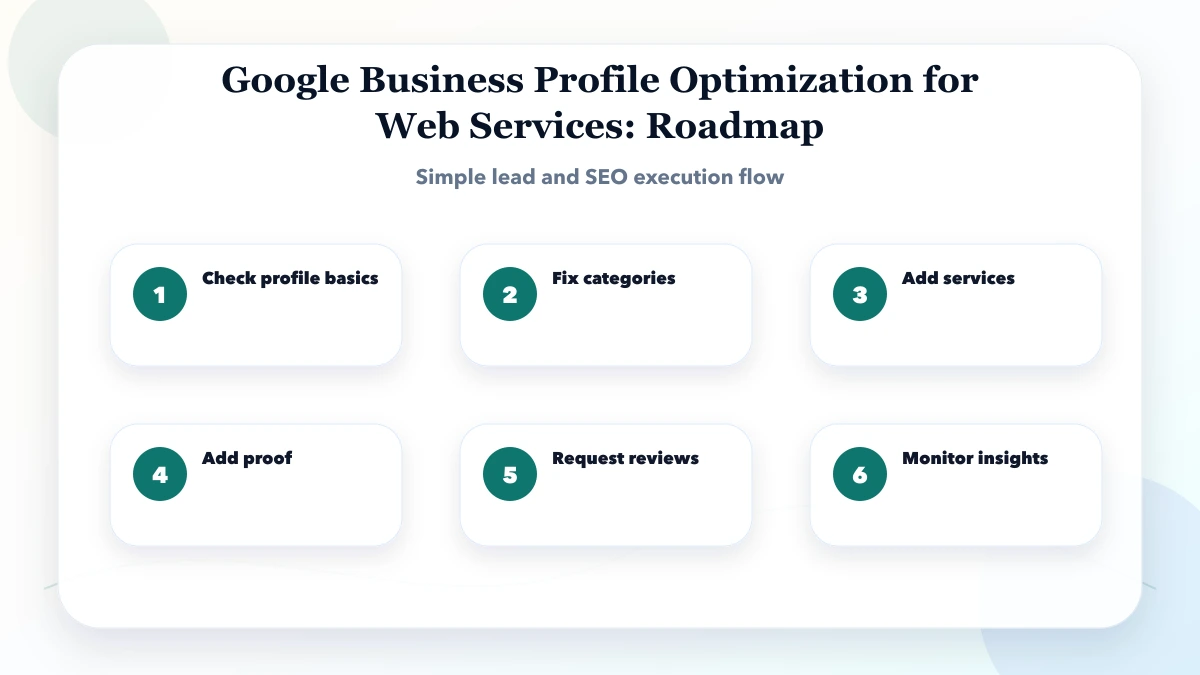
This sequence avoids guesswork. First understand the current page, then improve message and structure, then add tracking, then review real data. Design changes without tracking often feel productive but do not prove whether lead quality improved.
The stack should stay simple. Most service businesses do not need a complex marketing stack at the beginning. They need fast pages, clean forms, WhatsApp tracking, conversion events, and one place where enquiries are reviewed properly.
The biggest drivers are usually clarity and trust. A page with a strong offer, fast mobile loading, visible proof, and tracked CTAs can outperform a prettier page that says very little. For SEO, Google also needs clear page intent, helpful content, internal links, and consistent local signals.
Use four questions before making changes: what is the visitor trying to decide, what proof do they need, what action should they take, and how will we measure it? If the page does not answer these questions, it is not ready for serious lead generation.
For service businesses, the CTA should match intent. A high-intent visitor may want WhatsApp or a call. A research-stage visitor may want portfolio, pricing guidance, FAQs, or a case study first. Good pages support both without becoming cluttered.
Keep the language simple. Write like a real business owner will read it on mobile during office hours. Avoid vague claims like “best quality” without proof. Show service details, process, timelines, pricing cues, and what happens after enquiry.
If you serve multiple locations, do not copy the same paragraph across every city page. Add local proof, service area clarity, FAQs, portfolio examples, and practical contact options. This reduces duplicate-content risk and improves trust.
Read Google's Business Profile eligibility and ownership guidelines before setup or major edits. Use this decision sequence:
Eligibility is more important than an audit score. If VASUYASHII or another online-first web company does not currently meet the in-person requirement, focus on the website, Search Console, case evidence, partnerships, and relevant editorial mentions instead of forcing GBP.
| Field | Correct approach | Avoid |
|---|---|---|
| Business name | Real-world name used on website, documents, and signage | Adding services or cities not in the name |
| Primary category | Closest accurate core business category | Selecting broad unrelated categories |
| Address | Real eligible staffed location, if customers visit | Virtual office, mailbox, or misleading address |
| Service area | Places actually served in person | Listing distant cities only for reach |
| Hours | Hours customers can receive the stated service | Leaving holiday or temporary changes wrong |
| Phone | Controlled number answered by the business | A number nobody monitors |
| Website | Relevant canonical landing page with UTM tracking | Sending every profile to an unrelated page |
| Services | Specific genuine services with accurate wording | Repeating city keywords in every item |
Re-check the public result after changes. Major identity or location edits can require review or re-verification, so do not repeatedly change fields without a real business reason.
Describe the actual work: website development, web applications, integrations, software implementation, or another genuine service. Connect the profile to a landing page that confirms the same business identity, service scope, location or service area, proof, and contact process.
Useful proof includes real demos, process documentation, project evidence that is current, founder identity, business contact details, and genuine customer feedback. Do not publish client names, screenshots, or results without permission.
Choose photographs that help a customer verify the business: exterior and entrance for an eligible office, working environment, team, or service process. Avoid stock images presented as the location. Update media when the office or branding changes.
Ask for an honest review after a real completed engagement or meaningful milestone. Do not pay, exchange discounts, create friend reviews without a genuine customer relationship, review your own business, or ask only happy customers while suppressing others.
Give the customer the direct review link and let them use their own words. Respond without exposing private project details. For criticism, acknowledge the concern, explain the next contact step, and move account-specific discussion to a private channel.
Track review request date, project context, response status, and profile response owner. Never store a customer's Google account credentials or write the review for them.
Use one canonical HTTPS URL that matches the service intent. Add UTM parameters to the profile website link where appropriate, for example source google, medium organic, and a stable campaign such as gbp. Keep the underlying landing page canonical clean.
Measure website sessions, contact actions, valid form submissions, and qualified leads. GBP interface metrics and website analytics use different definitions, so do not expect every count to match. Avoid sending personal data in URLs or analytics events.
Connect the landing page to a relevant hub such as website development Delhi NCR, web application services, or integration services based on the actual primary category. Do not create a different profile or duplicate landing page for every city.
The current VASUYASHII editorial process treats GBP as an eligibility-dependent channel, not a mandatory SEO checkbox. Read the local SEO versus blogging guide before deciding where limited effort should go.
If your website gets traffic but not enough enquiries, start with a lead-flow audit. VASUYASHII can review your homepage, service pages, CTAs, forms, WhatsApp buttons, and GA4 tracking to find the practical fixes first.
Avoid changing only colors and banners when the real issue is message clarity, weak proof, poor section order, or missing tracking. A lead-focused website should help visitors decide faster and help the owner understand which changes are working.
It is for web development, SEO, software, design, and IT service providers who want better local visibility and more qualified enquiries. The goal is practical lead generation for Indian businesses, not theory.
Start with check profile basics. This makes the work tied to the real business goal instead of random design changes.
Use the pricing table as a planning range. Final cost depends on page count, tracking depth, design changes, integrations, and content work.
Yes, if the current website already has some relevant traffic. CTA placement, message clarity, and tracking can show improvement faster than broad SEO work.
Yes. Without tracking, you will not know which page, CTA, or source is bringing useful enquiries.
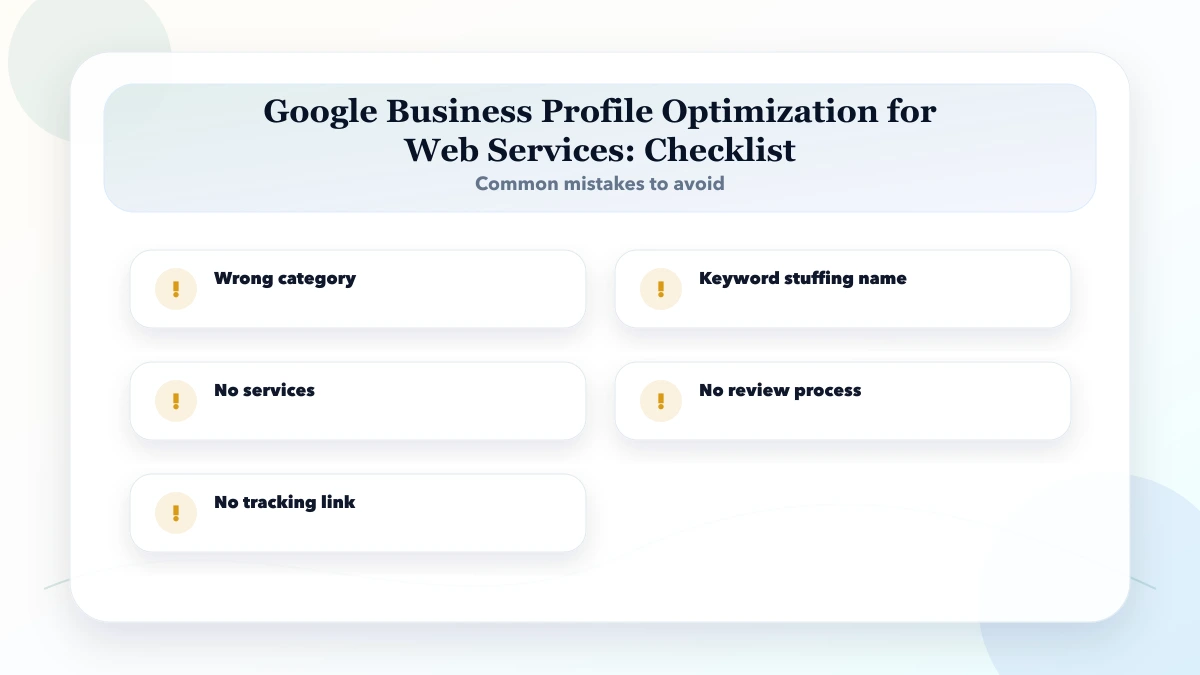
The biggest mistake is wrong category. It usually wastes traffic that could have become a lead.
Yes. VASUYASHII can help with website audit, service pages, landing pages, WhatsApp CTAs, GA4 tracking, SEO, and lead-focused redesign.
If you want a website that brings clearer leads, VASUYASHII can help with landing pages, service pages, WhatsApp CTAs, form cleanup, GA4 tracking, portfolio proof, and local SEO.
Related Articles
May 29, 2026
Set up an eligible service-company Google Business Profile with accurate ownership, category, service area, contact details, verification, and review practices.
Read article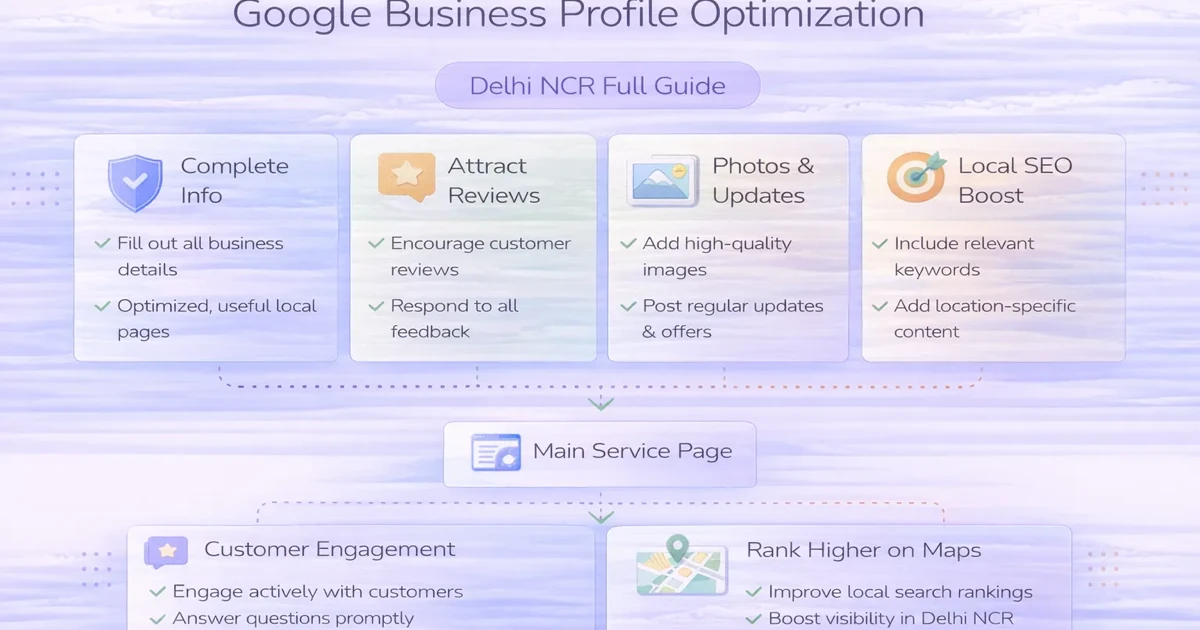
April 4, 2026
Operate a compliant Google Business Profile in Delhi NCR with eligibility checks, accurate details, reviews, website alignment and measurable maintenance.
Read article
May 9, 2026
reviews and trust signals that impact rankings: pricing, checklist, FAQs, trust signals, and practical SEO steps for Indian SMB owners.
Read article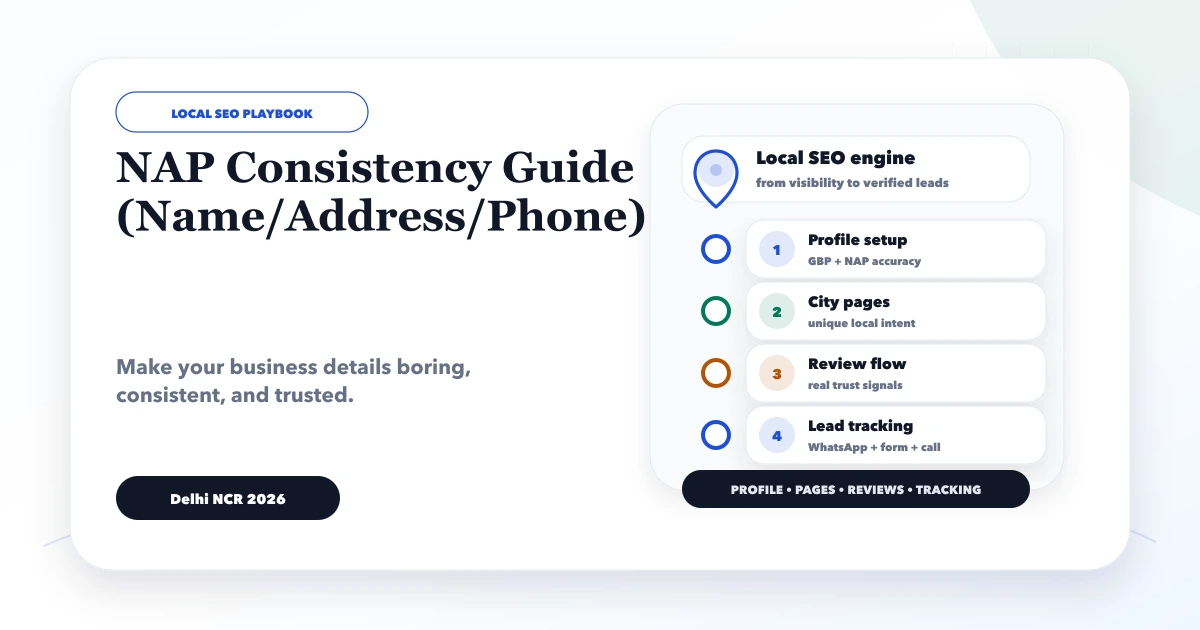
May 29, 2026
Create a reliable name, address and phone source of truth, audit local listings, handle service-area businesses, manage changes and prevent citation drift.
Read article